Spain’s Prime Minister Confronts Mounting Criticism Amid Energy Crisis and Government Instability
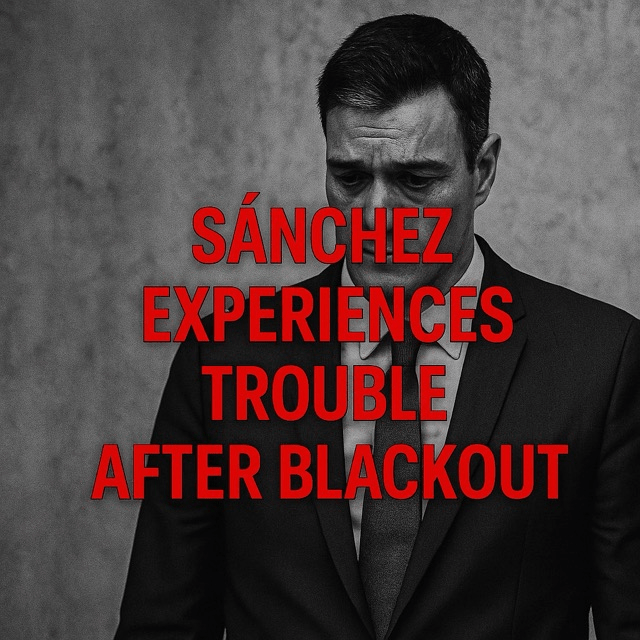
Spain’s Prime Minister Pedro Sánchez is facing one of the most severe political challenges of his tenure after a nationwide blackout disrupted essential services and sparked outrage across the country. The unexpected power outage, which lasted several hours and affected millions, triggered a storm of criticism directed at the government’s preparedness and infrastructure management.
The blackout occurred in the early hours of Tuesday morning, plunging major cities including Madrid, Barcelona, Valencia, and Seville into darkness. Hospitals, transportation networks, and communication systems experienced temporary paralysis, creating panic and confusion among citizens. Though power was restored later in the day, the fallout continues to ripple through Spain’s political landscape.
Critics from both the conservative opposition and Sánchez’s own Socialist Workers’ Party (PSOE) have questioned why contingency plans were either insufficient or not activated in time. Voices within the coalition have raised concerns over the vulnerability of Spain’s energy grid and its increasing reliance on external sources, including French and North African electricity imports.
Sánchez, speaking from the Moncloa Palace, assured the public that an official investigation had been launched and pledged full transparency. “This is a moment to take responsibility and ensure it never happens again,” he said. However, for many, the prime minister’s words rang hollow. Opposition leader Alberto Núñez Feijóo accused Sánchez of “governing reactively instead of proactively” and called for a parliamentary inquiry.
The incident comes at a precarious time for the Sánchez administration, which has already been grappling with economic stagnation, rising inflation, and unrest in several autonomous regions. The blackout has compounded public disillusionment, with social media flooded by hashtags such as #BlackoutCrisis and #SánchezFail.
Political analysts suggest that the blackout may become a turning point. “This isn’t just a technical issue,” said María Torres, a political scientist at the University of Salamanca. “It has become a symbol of deeper systemic failure, and Sánchez’s ability to navigate this moment will define his leadership.”
Meanwhile, regional leaders have begun pushing for greater autonomy over energy infrastructure, arguing that centralized management is proving inadequate. The president of Catalonia, Pere Aragonès, stated that “Madrid’s failure has once again cost Catalonia its security and continuity.” Similar sentiments echoed from the Basque Country and Andalusia.
In response, Sánchez convened an emergency energy summit with ministers and regional representatives, seeking to develop a comprehensive resilience plan. The proposed measures include modernizing the grid, increasing renewable energy investments, and establishing rapid-response units for future emergencies. Still, implementation may be slow, given the bureaucratic complexities and political divisions.
Public confidence in the government has plummeted, according to the latest polls. A survey by El País revealed that over 60% of Spaniards believe the government mishandled the crisis, while 45% say they would consider alternative leadership in the next election cycle.
With upcoming local elections and continued instability in the ruling coalition, the political stakes for Sánchez have never been higher. Whether he can regain public trust and steer Spain through the current crisis remains uncertain.
For now, the blackout may be over—but the political darkness has only just begun.



 The Tower Post