Populist Momentum and Democratic Mechanisms Clash Ahead of National Votes
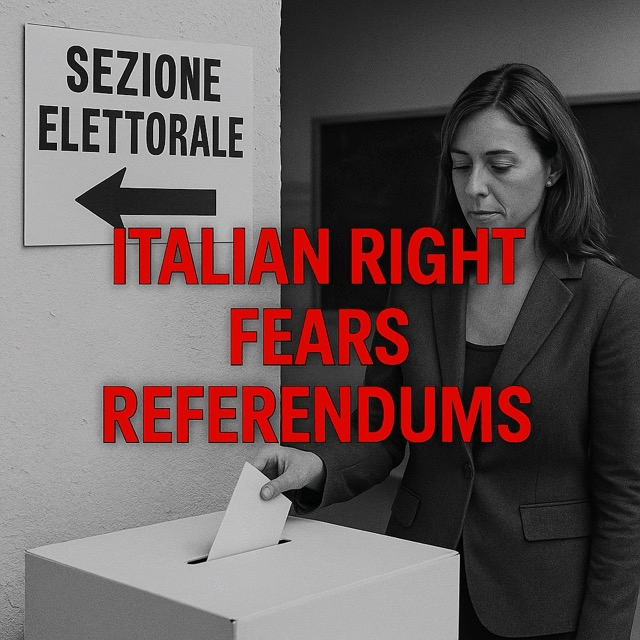
As Italy heads toward a series of key referendums, cracks are beginning to show within the ruling right-wing coalition, led by Prime Minister Giorgia Meloni’s Brothers of Italy party. While referendums are often hailed as the purest expression of democracy, they are now viewed by many on the Italian right with suspicion and strategic caution.
The upcoming votes—ranging from judicial reforms to labor protections and civil rights—have galvanized opposition parties and civic groups. For the center-right, however, the situation presents a paradox: embracing the referendums could risk revealing public disagreement with their agenda, while rejecting them openly may appear undemocratic.
According to sources within the ruling coalition, the leadership fears that the referendums could become a vehicle for broader anti-government sentiment, especially as economic challenges persist and discontent over immigration and public services grows. Internal polling reportedly shows that several of the referendum topics enjoy majority support among voters, even in traditional conservative strongholds.
Matteo Salvini, leader of the League, has taken a more ambivalent tone, suggesting that while the will of the people must be respected, “not all referendums are constructive.” Meloni, meanwhile, has tried to downplay the votes’ relevance, calling them “tools sometimes exploited by political theater.” Her remarks have prompted criticism from opposition leaders, who accuse the government of fearing open debate and democratic engagement.
Critics argue that the right’s unease stems from a deeper ideological conflict: the contradiction between nationalist populism—which purports to empower the people—and institutional conservatism, which prefers centralized control. The referendums expose this tension, offering voters a rare chance to challenge policy through direct participation.
Some observers point to the experience of past referendums, such as the 2016 constitutional reform vote that led to the resignation of then-Prime Minister Matteo Renzi, as a cautionary tale. Referendums, they argue, can be unpredictable and deeply consequential, especially when interpreted as a referendum on the government itself.
The left and liberal centrists have seized the opportunity to mobilize support, painting the referendums as a turning point for democratic accountability. “This is not just about laws—it’s about the right to be heard,” said Elly Schlein, leader of the Democratic Party. Civic movements, unions, and student groups have joined the campaign, organizing rallies and digital outreach to encourage participation.
Meanwhile, the right has adopted a more subdued approach, focusing on institutional messaging rather than grassroots mobilization. Government spokespeople have warned against “fragmenting national unity” and emphasized the importance of maintaining stability during a time of international uncertainty.
The political stakes are high. Should the referendums pass with strong public support, it could weaken the government’s mandate and embolden calls for further reforms. On the other hand, low turnout could delegitimize the votes and allow the government to claim validation.
In either scenario, the results will carry significant weight—not just for policy, but for the direction of Italian democracy itself. As the country prepares for these pivotal votes, one thing is clear: the Italian right fears the referendums, and that fear could shape their political future.




 The Tower Post