From Peace Project to Global Actor – The European Union Reflects on Its Journey
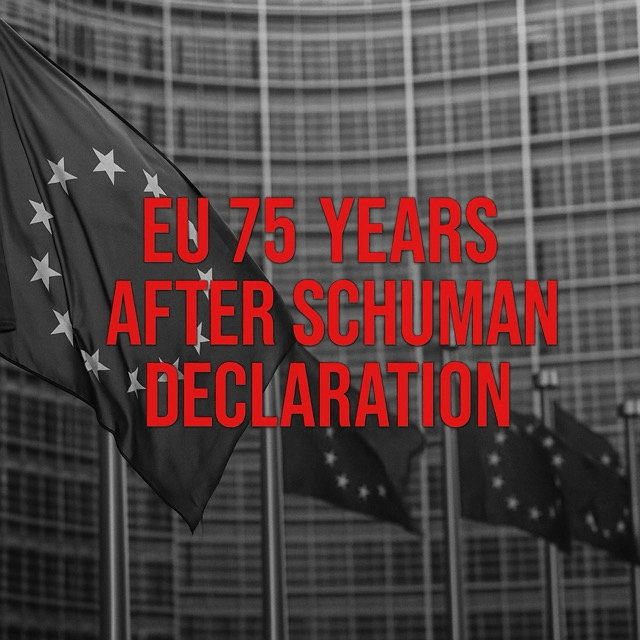
Seventy-five years after the Schuman Declaration laid the foundations for what would become the European Union, leaders across the continent are reflecting on the bloc’s evolution, achievements, and ongoing challenges. The historic speech delivered by French Foreign Minister Robert Schuman on May 9, 1950, proposed a European Coal and Steel Community—a bold step toward uniting a war-torn Europe under common economic interests.
What began as a pragmatic peace project has grown into one of the world’s most influential political and economic unions, comprising 27 member states, a single market, a common currency, and a shared commitment to human rights and democratic governance.
In Brussels and Strasbourg, commemorations of the declaration’s 75th anniversary include speeches by top EU officials, exhibitions, and forums on the future of Europe. European Commission President Ursula von der Leyen hailed the EU as a “force for peace, prosperity, and unity in a turbulent world.”
Yet the celebration also invites critical reflection. The EU faces significant internal and external pressures—from populist movements and migration debates to geopolitical competition with Russia and China. The war in Ukraine has revived discussions around EU defense integration and strategic autonomy, while Brexit continues to shape conversations about the bloc’s identity and cohesion.
Internally, economic disparities between member states, democratic backsliding in countries like Hungary and Poland, and debates over enlargement in the Western Balkans pose continued challenges. Nonetheless, supporters argue that the EU’s resilience in the face of crises—including the COVID-19 pandemic and energy instability—demonstrates its adaptability and relevance.
Younger generations are being encouraged to engage with Europe’s founding principles and take part in shaping its next chapter. Initiatives like the Conference on the Future of Europe, citizen assemblies, and expanded Erasmus programs aim to renew the Union’s social contract and democratic legitimacy.
Looking ahead, the EU is expected to deepen digital and green transitions, strengthen common foreign policy mechanisms, and reconsider institutional reforms. The spirit of cooperation and shared sovereignty championed by Schuman remains a guiding light, even as the EU navigates a vastly changed global landscape.
As Europe marks this milestone, the legacy of the Schuman Declaration reminds citizens and leaders alike that unity, while challenging, remains the surest path to peace and progress.


 The Tower Post