How the Czech Capital Became a Geopolitical Battleground Between East and West
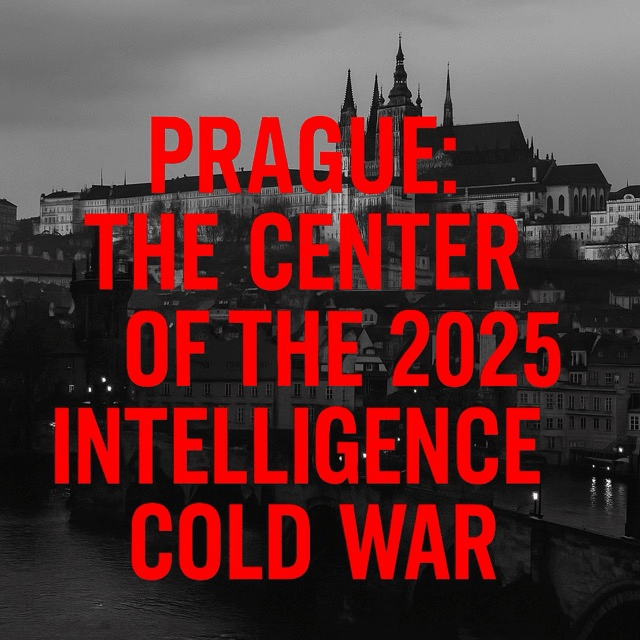
In 2025, Prague has emerged as the epicenter of a renewed intelligence cold war. No longer just a picturesque European capital, the city has become a hotspot for espionage, surveillance, and covert operations. Western and Eastern intelligence agencies are increasingly using the Czech Republic as a base for information warfare, reflecting broader geopolitical tensions.
Historical Roots and Strategic Location
Prague’s legacy as a Cold War crossroads is well documented. Situated at the heart of Europe, it was once a key post for both Soviet and Western spies. That legacy has come full circle. With its strategic location, advanced telecom infrastructure, and history of political neutrality, Prague is ideal terrain for intelligence operations.
NATO officials and European analysts have pointed to Prague as a “listening post” city, where embassies are hubs of surveillance and disinformation monitoring. The Czech counterintelligence service (BIS) has warned that Prague is now hosting record numbers of foreign agents, primarily from Russia and China, often operating under diplomatic cover.
A Battle of Influence and Cyber Operations
The 2025 intelligence cold war in Prague goes beyond physical presence. It’s a digital war zone. Numerous cyberattacks on Czech government agencies and infrastructure have been traced back to state-linked hacking groups such as Russia’s APT28 and China’s APT31. These attacks aim not only to steal classified data but to undermine public trust and manipulate media narratives.
Western allies, led by the United States and United Kingdom, have responded by ramping up their cyber defense operations in coordination with the Czech government. Prague now hosts joint NATO-cyber cells and EU-funded cybersecurity research centers that are key to European digital sovereignty.
Disinformation Frontline
Beyond espionage and cyber warfare, Prague has become a battleground for information warfare. Russian and Chinese state media outlets operate aggressively within the Czech Republic, amplifying disinformation narratives targeting the EU, NATO, and democratic institutions. These narratives are designed to exploit social divisions and erode democratic confidence.
In response, the Czech government has launched the Center for Hybrid Threat Response, a watchdog group tasked with identifying and debunking false information. Local NGOs and journalists have also become essential actors in exposing propaganda networks, even as they face harassment and digital threats.
Intelligence Diplomacy and Political Fallout
The intelligence cold war in Prague has had real diplomatic consequences. In recent years, the Czech government expelled dozens of Russian diplomats accused of espionage, prompting tit-for-tat measures. China, too, has faced heightened scrutiny, with Czech intelligence agencies investigating university partnerships suspected of intellectual property theft.
These moves have strained Czech relations with both Moscow and Beijing, aligning the country more closely with the Western bloc. Prague has become symbolic of Europe’s broader repositioning in a new global intelligence landscape.
Conclusion
As tensions between major powers escalate, Prague stands at the intersection of a global intelligence cold war. What happens in this seemingly serene city has consequences far beyond its borders. In the quiet backstreets and historic buildings of the Czech capital, the frontlines of modern espionage and digital warfare are being drawn.


 The Tower Post