OECD Chief Economist Calls for Coordinated Reform in Post-Crisis Recovery
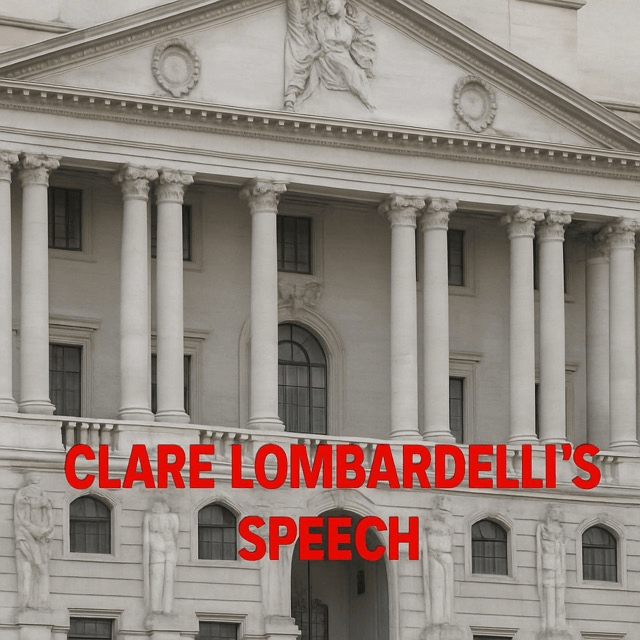
In a landmark speech delivered at the Global Policy Summit in Paris, Clare Lombardelli, the newly appointed Chief Economist of the Organisation for Economic Co-operation and Development (OECD), presented a bold vision for a more resilient, inclusive, and sustainable global economy.
Lombardelli’s address, titled “Building Economic Resilience for an Uncertain Future,” outlined a set of coordinated reforms aimed at strengthening the world’s response to overlapping crises such as inflation, supply chain shocks, climate change, and inequality. Her speech emphasized the need to move beyond reactive policy and instead focus on building adaptive economic structures that can withstand future disruptions.
One of the central pillars of her message was the rethinking of fiscal and monetary policy coordination. “The era of isolated national responses must end,” she declared. “Economic stability now depends on the depth of global cooperation, especially among advanced economies and emerging markets.” Lombardelli called for a reinvigorated role for multilateral institutions to facilitate such alignment.
Addressing inflation, Lombardelli acknowledged the difficult balancing act central banks face in curbing price growth without stalling recovery. She proposed more transparent forward guidance and structural reforms that address the root causes of supply-driven inflation, such as labor shortages, energy dependencies, and fragile trade routes.
On climate economics, Lombardelli was unambiguous. “There is no path to prosperity that excludes decarbonization,” she said, urging governments to embed climate transition goals into their core macroeconomic strategies. She proposed a globally synchronized carbon pricing mechanism and more equitable financing for developing nations to achieve climate resilience.
Inequality, both within and between nations, featured prominently in the speech. Lombardelli called for a new social contract that includes improved labor protections, investment in digital and green skills, and fairer tax systems. She argued that only through greater inclusion can societies maintain the legitimacy of democratic capitalism.
Her remarks have drawn praise from policymakers and economists who see in her leadership a refreshing blend of pragmatism and ambition. Critics, however, questioned whether such sweeping reforms are politically feasible, particularly amid rising nationalism and fragmented global politics.
Still, Lombardelli’s speech appears to have sparked renewed urgency in international circles. The IMF, World Bank, and several finance ministries released statements aligning with key aspects of her proposal. Some have dubbed it a “Bretton Woods moment for the 21st century,” suggesting her vision may influence the agenda of the next G20 summit.
As the global economy continues to evolve in the face of volatility and transformation, Clare Lombardelli’s voice may prove pivotal. Her speech has positioned her not just as an economic steward, but as a strategic thinker prepared to lead the charge into a new era of global economic governance.


 The Tower Post