A Surprising Diplomatic Turn from the Former U.S. President
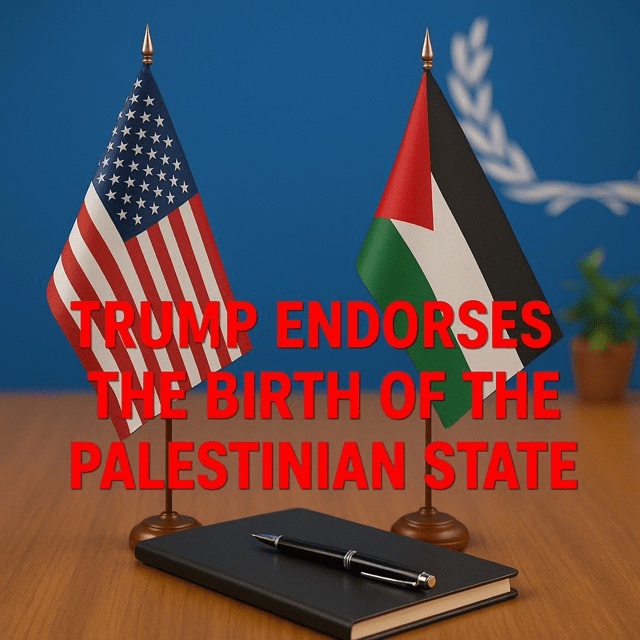
In a move that has sent shockwaves through the international diplomatic community, former U.S. President Donald Trump has publicly endorsed the formal creation of a Palestinian state. Known for his strong alliance with Israel during his presidency—marked notably by the controversial relocation of the U.S. Embassy to Jerusalem—Trump’s recent pivot has been interpreted as both a strategic maneuver and a legacy play.
Speaking at a private forum attended by Middle Eastern dignitaries and media representatives in Doha, Qatar, Trump outlined a vision for a “secure, prosperous, and sovereign Palestine” existing alongside Israel. He emphasized economic cooperation, mutual security guarantees, and American-led infrastructure investments as pillars of a new two-state framework.
This endorsement, while still unofficial in terms of U.S. policy, could have major implications. It signals a shift in tone from Trump, who previously cut funding to the United Nations Relief and Works Agency (UNRWA) and closed the Palestinian diplomatic mission in Washington. Analysts suggest that this change may be part of a broader effort to reclaim relevance on the world stage as Trump eyes another run for the White House.
Reactions to Trump’s statement have been mixed. Palestinian leaders welcomed the recognition but expressed skepticism, noting the need for concrete actions rather than declarations. Israeli officials responded cautiously, wary of any proposals that could alter established security agreements or encourage unilateral Palestinian initiatives.
The international community, long divided over the path to Middle East peace, is now reassessing how Trump’s re-engagement could reshape negotiations. European leaders, particularly in France and Germany, cautiously praised the initiative, viewing it as a possible opening for new diplomatic momentum. Meanwhile, Gulf nations such as the UAE and Saudi Arabia have reportedly begun informal discussions on how to support a potential roadmap.
Behind this endorsement may lie a pragmatic calculation. Trump’s signature style of deal-making may see the Israeli-Palestinian conflict not as an ideological divide, but as an opportunity for high-stakes negotiation and legacy building. With the Abraham Accords already altering regional dynamics, the recognition of Palestine could be framed as the final piece in a Trump-led peace puzzle.
Critics warn, however, that Trump’s inconsistent record in the region, coupled with deeply entrenched divisions between Palestinian factions and Israeli hardliners, makes any progress uncertain. Still, the former president’s capacity to dominate headlines and influence public debate should not be underestimated.
Whether symbolic or substantial, Trump’s announcement has undeniably reignited discourse on the long-standing question of Palestinian statehood. As the global community watches closely, a new chapter in Middle Eastern diplomacy may be unfolding—with one of the most polarizing figures of recent political history again at the center of it all.

 The Tower Post