How Taiwan is Preparing for a Potential Chinese Invasion
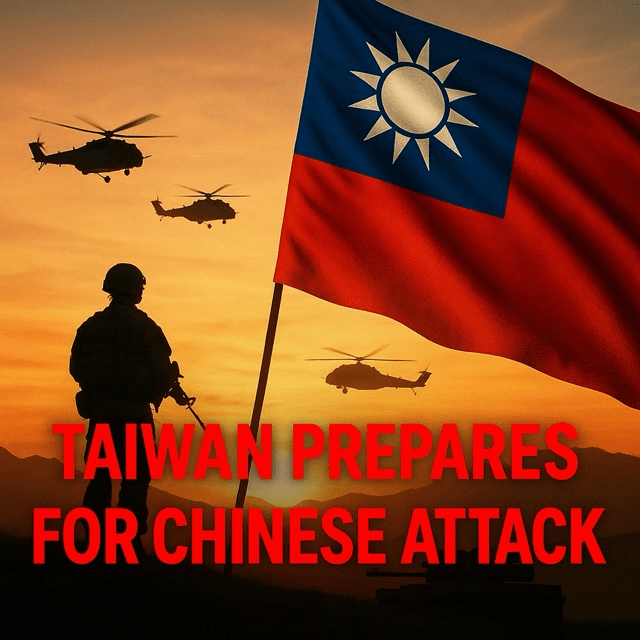
As geopolitical tensions continue to rise in the Indo-Pacific region, Taiwan finds itself at the epicenter of a potential flashpoint that could redefine the balance of global power. The island, officially known as the Republic of China (ROC), has long lived under the looming threat of military aggression from the People’s Republic of China (PRC), which considers Taiwan a breakaway province. In recent years, China has intensified military drills near Taiwanese airspace and waters, prompting an urgent reassessment of defense strategies by Taipei. This article explores the key measures Taiwan is taking to prepare for a possible attack from China.
Military Modernization and Strategic Partnerships
Taiwan has significantly increased its defense spending, reaching a record $19 billion USD in 2024. Investments have focused on asymmetric warfare capabilities, such as mobile missile systems, fast attack craft, drones, and coastal defense units. These are designed to exploit the vulnerabilities of a much larger invading force. The island has also moved toward building a stronger indigenous defense industry to reduce dependence on foreign arms.
In parallel, Taiwan has strengthened unofficial ties with democratic allies, especially the United States and Japan. While these relationships stop short of formal defense treaties, ongoing military cooperation, joint training exercises, and the provision of advanced weaponry—including F-16V fighter jets and Patriot missile systems—have bolstered Taiwan’s deterrence capabilities.
Civil Defense and Public Resilience
Beyond military readiness, Taiwan has made substantial efforts to improve civil defense infrastructure. Air raid shelters have been refurbished, emergency drills are held regularly in urban centers, and public education campaigns are teaching citizens how to respond to a military crisis. The government has also created digital platforms to provide real-time updates during emergencies.
Cybersecurity is another frontline. Given China’s track record of cyber warfare, Taiwan has fortified its digital infrastructure to protect critical systems such as power grids, transportation, and communications from potential disruption. The island’s tech-savvy population is being mobilized as a digital defense force to identify and counter disinformation and cyber threats.
Psychological Preparedness and National Unity
Perhaps Taiwan’s most important preparation is psychological. The government has engaged in consistent messaging that emphasizes national unity, democratic values, and the importance of resilience. The sense of shared identity among Taiwanese people has grown, with polls indicating a strong majority supporting de facto independence.
In conclusion, while the specter of conflict casts a long shadow over Taiwan’s future, the island is not standing idle. Through a combination of military upgrades, international alliances, civil defense initiatives, and national cohesion, Taiwan is sending a clear signal: it is prepared to defend its democracy against external threats, no matter the cost.



 The Tower Post