Infrastructure, minerals and mercenaries: the dual tracks of Beijing and Moscow’s engagement in 21st‑century Africa
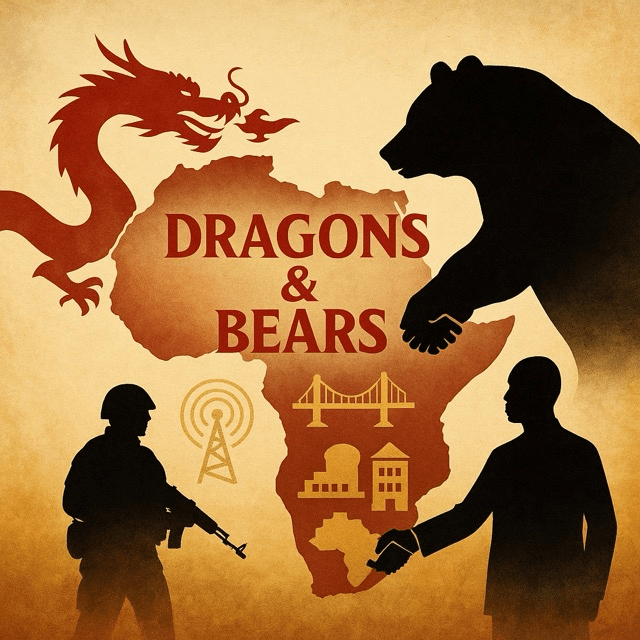
The footholds of Beijing’s Belt and Road Initiative and Moscow’s mercenary deployments rarely overlap on a map, yet together they now stitch a powerful web of influence across Africa. China supplies railways and fibre‑optic cables; Russia offers subsidised grain and guns. Following the COVID‑19 slowdown and the invasion of Ukraine, both powers have doubled down on the continent in search of critical minerals, diplomatic allies and ideological cachet.
After a pandemic lull, 2024 saw record Chinese engagement with USD 70.7 billion in construction contracts and USD 51 billion in investments under the Belt and Road Initiative (BRI) New Chinese investment in Africa rose 114 percent in 2023, driven largely by copper, cobalt and lithium deals essential to the global energy transition. Beijing still commands Africa’s biggest bilateral debt stock: Nigeria alone owes more than USD 5 billion, even as it approved another USD 652 million China Exim Bank loan for a key export corridor in May 2025.
Russia’s Security‑State Niche. Where China builds, Russia guards. With Wagner’s collapse, the Kremlin re‑branded its Sahel footprint as *Africa Corps*, courting juntas in Mali, Niger and Burkina Faso and positioning itself as their ‘partner of choice’. Yet Moscow’s offer is not just soldiers. At the 2023 Russia–Africa summit President Putin pledged free grain to six African nations and debt write‑offs worth USD 23 billion, framing Russia as anti‑colonial saviour.
Arms, Energy and Minerals—Overlapping Frontiers. Russia remains Africa’s largest source of military hardware after China: SIPRI estimates 12 percent of Russian arms exports in 2020‑24 went to African clients, even as its global share collapsed. Meanwhile Beijing dominates the infrastructure that moves those resources—from Kenya’s Standard Gauge Railway to Djibouti’s new free‑trade zone—often securing long‑term offtake agreements.
Far from passive, African governments leverage the China‑Russia rivalry to extract concessions. Angola refinanced oil‑backed Chinese loans through Eurobond markets; Mali traded mineral rights for Russian security support. The BRICS enlargement of 2024, which admitted Egypt and Ethiopia, further broadens manoeuvring space.
The downside is visible: Chinese lending to Africa fell to a two‑decade low in 2022, but arrears are still climbing; nearly a fifth of Kenya’s public debt is owed to Beijing. Russia’s disinformation campaigns—from Bangui to Bamako—inflate popular support for juntas while eroding trust in Western partners.
Washington’s Prosper Africa platform and the EU Global Gateway pledge billions, yet neither matches Chinese speed nor Russian risk tolerance. Gulf sovereign wealth funds, meanwhile, have started to co‑finance BRI logistics hubs, complicating the contest for influence.
China is piloting digital‑yuan settlement in Kenya and South Africa to bypass the dollar, while Russia flirts with ruble‑denominated commodity trades. Chinese space‑tracking stations in Ethiopia and proposed sites in Namibia add a geostrategic layer that worries Western militaries.
Beijing’s cranes and Moscow’s Kalashnikovs offer African leaders divergent but often complementary benefits. For Africa’s 1.4 billion citizens, the ultimate question is whether external engagement will translate into sustainable growth or deepen cycles of debt and conflict. The answer will depend less on dragons or bears—and more on how effectively African societies harness, regulate and, when necessary, resist their influence.

 The Tower Post