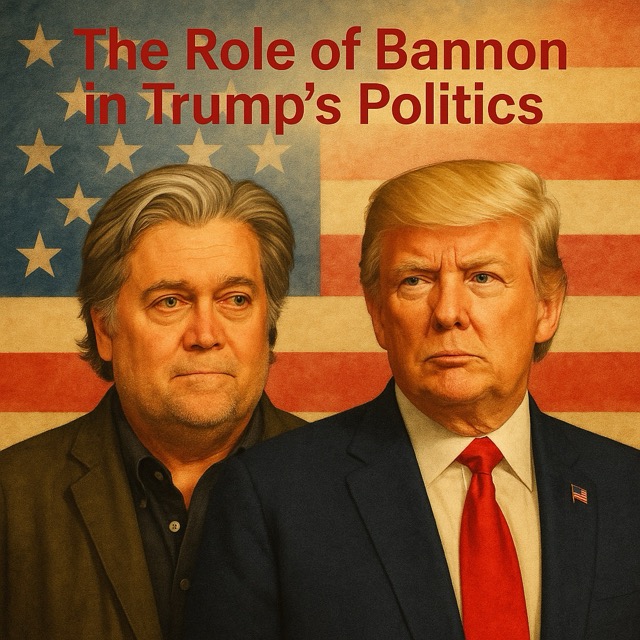
The role of Bannon in Trump’s Politics
Steve Bannon, the controversial former White House Chief Strategist, played a pivotal role in shaping the populist and nationalist narrative of Donald Trump’s 2016 presidential campaign and early administration. A former investment banker and executive chairman of Breitbart News, Bannon entered Trump’s campaign in August 2016 and quickly became a key voice in crafting its message. His influence extended beyond communications into ideology, promoting an ‘America First’ agenda that emphasized economic nationalism, immigration control, and cultural conservatism.
Bannon’s philosophy was rooted in a belief that the political and economic elite had failed the American working class. He championed a brand of right-wing populism that fused anti-globalist rhetoric with cultural conservatism. Under Bannon’s guidance, the Trump campaign leaned heavily into themes that resonated with disaffected voters, including opposition to trade agreements, immigration reform, and Washington’s political establishment. Bannon also helped frame Trump not just as a candidate, but as a disruptive force challenging the status quo.
During his brief but impactful tenure in the White House, Bannon clashed with many in the administration, including members of the military and economic advisors, over the direction of policy. He was a strong advocate for withdrawing from multilateral agreements such as the Paris Climate Accord and took a confrontational approach to China, arguing for economic decoupling. Though he officially left the administration in August 2017, Bannon continued to wield influence from the outside, promoting populist movements and shaping media narratives.
Bannon’s departure did not diminish his role in global right-wing politics. He launched initiatives to support nationalist movements in Europe, aligning with figures such as Marine Le Pen in France and Matteo Salvini in Italy. His goal was to establish a new international order based on nationalist sovereignty, rejecting liberal democratic norms and multilateralism. Although his efforts were met with mixed success, they underscored his ambition to reshape not just American politics, but Western political ideology as a whole.
Critics argue that Bannon’s influence normalized extremism and divisive rhetoric in the political mainstream, while his supporters credit him with giving voice to a marginalized electorate. Regardless of perspective, his role in defining the tone and trajectory of Trumpism is undeniable. As Trump hints at a political comeback, questions about Bannon’s continued relevance and potential return to the political stage remain open.



 The Tower Post