The Enduring Tensions Between India and Pakistan: Origins and Outlook
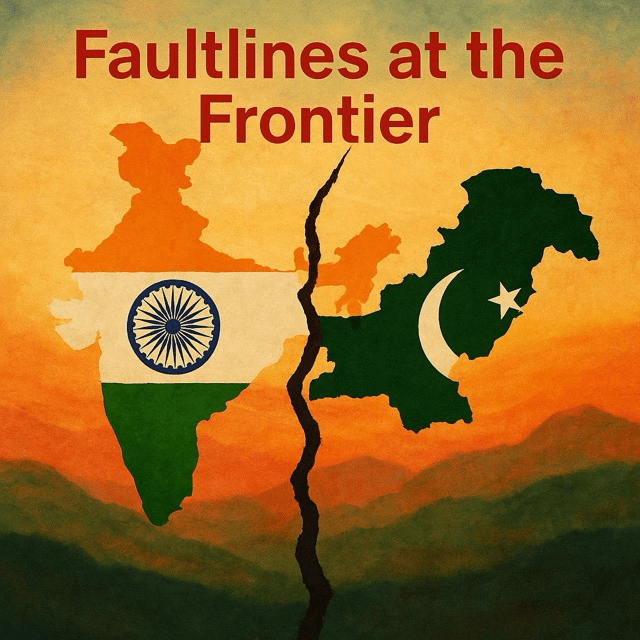
The conflict between India and Pakistan stands as one of the most protracted and volatile rivalries in modern geopolitics. The roots of this tension trace back to the partition of British India in 1947, an event that marked the birth of both India and Pakistan as independent nations. The partition, driven by religious and political divisions, was marred by mass migrations and communal violence, leaving a legacy of mistrust and trauma that continues to influence bilateral relations.
At the heart of the India-Pakistan conflict lies the region of Jammu and Kashmir. Following partition, the princely state of Jammu and Kashmir, with a Muslim-majority population but a Hindu ruler, became a contentious issue. The Maharaja’s decision to accede to India sparked the First Indo-Pakistani War (1947–1948), resulting in a UN-mediated ceasefire and the establishment of the Line of Control (LoC). Since then, the region has remained divided, with India administering Jammu, Kashmir, and Ladakh, and Pakistan controlling parts of Kashmir and Gilgit-Baltistan.
Three full-scale wars (1947, 1965, and 1971), numerous border skirmishes, and cross-border terrorist incidents have kept the region on edge. In particular, the Kargil War of 1999 and the 2008 Mumbai attacks highlighted the risks of escalation between two nuclear-armed states. India accuses Pakistan of supporting militant groups operating in Kashmir and other parts of India, while Pakistan claims to champion the cause of Kashmiri self-determination in the face of alleged human rights violations by Indian security forces.
The rise of nationalist politics in both countries has further strained relations. India’s revocation of Article 370 in August 2019, which removed Jammu and Kashmir’s special autonomy, was met with strong opposition from Pakistan. Diplomatic ties were downgraded, and military posturing intensified. Although both nations have expressed commitments to peace in various fora, sustained dialogue remains elusive, frequently disrupted by terror attacks or political developments.
Despite these persistent tensions, there are occasional glimpses of cooperation, particularly in trade, people-to-people exchanges, and cricket diplomacy. However, without a long-term political solution on Kashmir and a mutual commitment to combating extremism, the road to lasting peace remains uncertain. The conflict continues to shape South Asia’s strategic landscape, with implications for regional and global stability.


 The Tower Post