Assessing the Causes, Implications, and Economic Signals Behind the Recent Rise in Unemployment
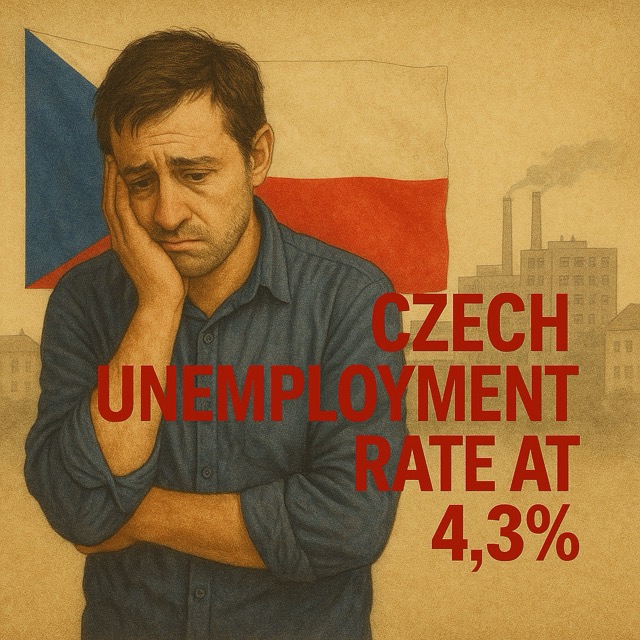
The Czech Republic, long considered one of Central Europe’s economic success stories, has seen its unemployment rate climb to 4.3%—its highest in over two years. While this figure remains relatively low by European standards, it marks a notable shift from the country’s previously ultra-tight labor market and raises questions about the resilience of its economy amid global uncertainty.
The rise in unemployment is attributed to a combination of domestic and external pressures. Key sectors such as manufacturing and automotive—pillars of the Czech economy—have been hit by declining exports, global supply chain disruptions, and reduced demand from major trade partners like Germany. These factors have forced some companies to scale back production or lay off workers, contributing to the uptick in joblessness.
Inflation, though moderating, has also played a role in dampening consumer spending, leading to reduced business activity and hiring hesitations. While the Czech National Bank has maintained a cautious monetary policy, efforts to stabilize the koruna and control inflation have had limited impact on boosting employment.
Demographic trends are another factor. The Czech workforce is aging, and while labor shortages were a concern just a year ago, the current situation reflects a mismatch between available skills and open positions. Some employers are struggling to fill roles requiring technical expertise, while layoffs are occurring in less specialized industries.
Government officials have downplayed the rise in unemployment, calling it a “manageable adjustment” rather than a crisis. Labor Minister Marian Jurečka emphasized that the economy is undergoing a transformation that may temporarily affect employment but will ultimately lead to a more resilient labor market. Still, opposition parties have criticized the government’s response as insufficient, citing the need for stronger labor retraining programs and support for small and medium-sized enterprises.
The Czech unemployment rate’s increase is also being closely watched by international investors. A continued upward trend could dampen investor confidence and affect foreign direct investment, particularly in industrial zones that rely heavily on a stable labor supply. However, some analysts argue that the current shift may encourage innovation and automation in sectors traditionally reliant on manual labor.
Looking forward, the government is expected to introduce targeted stimulus measures aimed at key sectors and at-risk regions. Programs focusing on digital transformation, green technologies, and vocational training are seen as potential tools to counteract rising unemployment and prepare the workforce for future demands.
While 4.3% unemployment may not sound alarming in a broader European context—where jobless rates often hover much higher—it signals a crucial turning point for the Czech economy. As global conditions remain volatile, the country must balance short-term interventions with long-term structural reforms to safeguard its economic stability.
In conclusion, the Czech Republic’s recent unemployment figures serve as a wake-up call to policymakers, businesses, and workers alike. Whether this moment becomes a brief pause or the beginning of a more prolonged labor market shift depends on the strategic choices made in the months to come.




 The Tower Post