How Tehran’s Backing of Yemen’s Rebels Is Reshaping the Middle East Power Dynamics
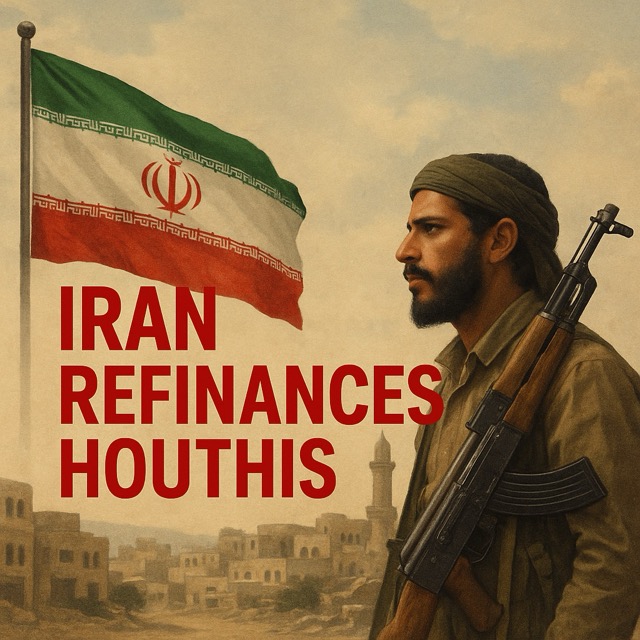
The ongoing conflict in Yemen has drawn significant international attention, not only for its devastating humanitarian impact but also for its role as a proxy battleground for regional powers. Among the central players is Iran, which has been repeatedly accused of providing financial and military support to the Houthi rebels in Yemen. This support, while often denied by Tehran, has been substantiated by intelligence reports and regional analyses that point to a consistent flow of resources, including advanced weaponry and training.
Iran’s support for the Houthis fits into its broader strategy of countering Saudi influence in the region. The Houthis, formally known as Ansar Allah, are a Shia rebel group that seized control of Yemen’s capital, Sana’a, in 2014 and ousted the internationally recognized government. Since then, they have received increasing backing from Iran, which sees them as a useful ally against its Sunni rivals, primarily Saudi Arabia and the United Arab Emirates.
The financing mechanisms used by Iran are complex and often disguised through a network of front companies, charities, and indirect transfers. Recent investigations suggest that Iran’s Islamic Revolutionary Guard Corps (IRGC) plays a pivotal role in funneling both funds and arms to the Houthis. These include ballistic missiles, drones, and other sophisticated equipment that have significantly enhanced the Houthis’ capabilities against the Saudi-led coalition.
This support has not gone unnoticed. The United States and several European nations have imposed sanctions on individuals and entities tied to this financing network. Meanwhile, the international community continues to debate whether stronger measures should be taken to curb Iran’s influence in Yemen. Critics argue that Iran’s involvement prolongs the war and hinders peace efforts, while Iran maintains that its support is politically and ideologically justified.
The implications of Iran’s financial backing of the Houthis are profound. It reflects a deepening sectarian divide and underscores the geopolitical competition playing out across the Middle East. More importantly, it raises questions about the future of Yemen and the prospects for a negotiated settlement. As long as external powers continue to fuel the conflict, peace will remain elusive.
Moreover, this support impacts global energy markets and maritime security, given Yemen’s proximity to the Bab el-Mandeb Strait, a crucial chokepoint for oil transportation. Houthi threats to international shipping have already escalated tensions in the Red Sea, leading to broader security concerns that extend far beyond the Middle East.
In conclusion, Iran’s refinancing of the Houthis is not just a matter of bilateral relations but a significant component of a much larger regional chessboard. Addressing it requires not only diplomacy but also a comprehensive understanding of the intersecting interests at play. Without this, the road to peace in Yemen—and stability in the Middle East—will remain perilously uncertain.


 The Tower Post