Exploring the Strategic and Economic Implications of the Temporary Tariff Freeze Between Washington and Beijing
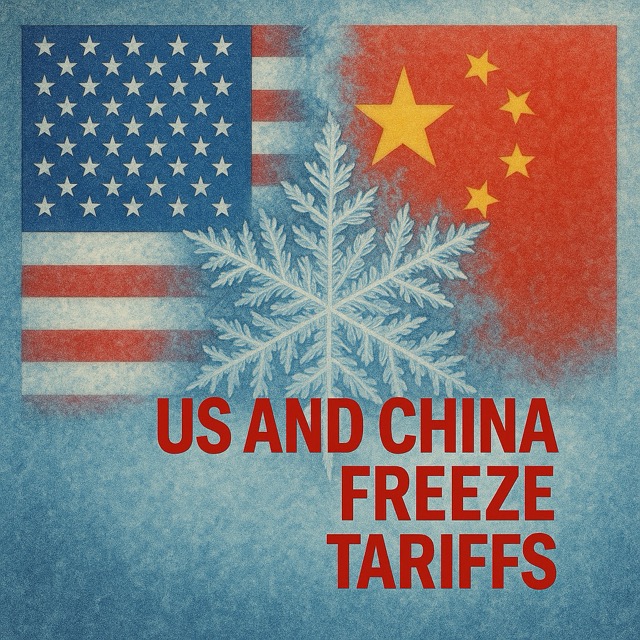
In a surprising yet cautiously welcomed move, the United States and China have agreed to freeze the imposition of new tariffs on each other’s goods, signaling a temporary truce in a long-running trade war that has defined global economic tensions for much of the last decade. This development, though tentative, has already sparked a wave of reactions from markets, policymakers, and businesses around the world.
The agreement, reached after a series of high-level negotiations, aims to stabilize trade relations between the world’s two largest economies, which have been battered by successive rounds of tariffs, counter-tariffs, and political escalations. The freeze means that neither side will introduce additional duties for a specified period, allowing space for further dialogue and potential long-term arrangements.
For Washington, the decision reflects a growing awareness of the domestic economic toll of continued tariffs, especially amid rising inflation and supply chain disruptions. American manufacturers, farmers, and retailers have long complained that tariffs on Chinese imports have increased their costs and hurt competitiveness. By pausing further escalation, the Biden administration appears to be seeking a more balanced approach that combines firmness with pragmatism.
In Beijing, the tariff freeze is seen as an opportunity to stabilize an economy already facing challenges from sluggish domestic demand, property market instability, and high youth unemployment. The Chinese government is likely hoping that easing trade tensions will support its efforts to stimulate growth and maintain a stable business environment for foreign investors.
Despite the positive tone, analysts caution that the freeze is far from a resolution. Underlying tensions remain over key issues such as technology transfers, intellectual property rights, and national security concerns. The recent agreement does not roll back existing tariffs, which continue to affect hundreds of billions of dollars in goods.
The move also has geopolitical implications. As both nations seek to assert their global influence, maintaining a semblance of economic cooperation is vital. The tariff pause may also reflect a recognition that full-scale economic decoupling would be costly and disruptive for both sides, particularly in critical sectors like semiconductors, renewable energy, and pharmaceuticals.
Global markets have responded positively to the news. Stock exchanges in Asia, Europe, and North America saw gains following the announcement, and commodity prices stabilized. Business groups have urged both governments to use this window to pursue substantive agreements that reduce uncertainty and promote fair trade practices.
Critics, however, argue that the pause might simply delay inevitable conflicts, with both sides using the time to regroup and reposition. They warn that unless the current détente is accompanied by meaningful reforms and a mutual commitment to cooperation, tensions could quickly reignite.
In conclusion, the U.S.-China tariff freeze marks a notable shift in the trajectory of the trade conflict, offering a rare moment of de-escalation. While it is not a resolution, it provides a crucial opportunity for diplomacy and economic recalibration. The coming months will reveal whether this move leads to a more stable and collaborative relationship or simply postpones a return to confrontation.




 The Tower Post