New Routes in a Multipolar World Between the U.S. and China
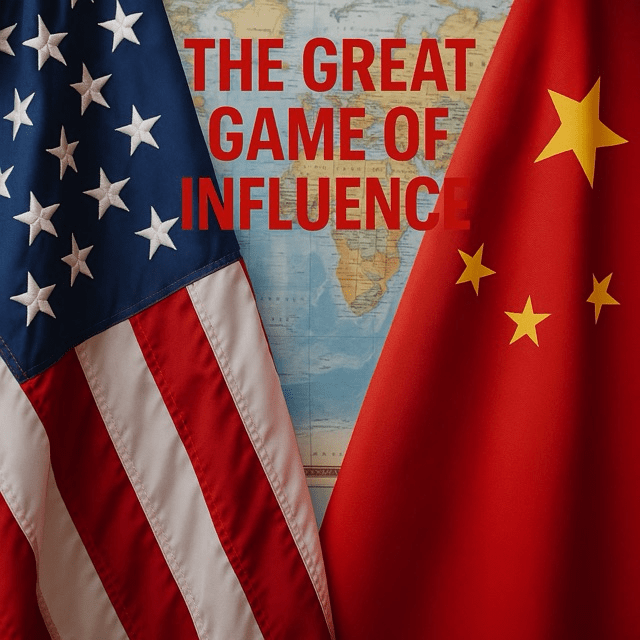
As the global order shifts from a unipolar to a multipolar structure, the United States and China are emerging as the primary contenders in a complex game of influence. This new geopolitical landscape is defined less by direct confrontation and more by strategic maneuvering, economic diplomacy, technological supremacy, and soft power projection.
The United States, long regarded as the guardian of the liberal international order, now faces challenges from a more assertive and globally ambitious China. Beijing’s Belt and Road Initiative (BRI) has become the cornerstone of its foreign policy, linking Asia, Africa, and Europe through infrastructure investments and development aid. Through this, China has cultivated a network of economic dependencies and diplomatic ties that increasingly challenge U.S. influence, particularly in the Global South.
In response, Washington has sought to reinvigorate alliances such as NATO, the Quad (with India, Japan, and Australia), and the newly formed AUKUS pact. At the same time, it is expanding its economic presence through the Indo-Pacific Economic Framework and green investment partnerships. The competition now extends to areas such as AI, cybersecurity, quantum computing, and clean energy, where technological leadership equates to geopolitical leverage.
Africa and Latin America have become key battlegrounds in this contest. While China invests heavily in resource extraction, infrastructure, and telecommunications across the continent, the U.S. is ramping up support for democratic institutions, governance, and entrepreneurship. In Latin America, the two powers are vying for influence over trade, digital infrastructure, and strategic ports.
Southeast Asia represents a particularly sensitive front. Nations like Vietnam, Indonesia, and the Philippines are navigating a delicate balance between economic reliance on China and security partnerships with the U.S. Their choices will have lasting implications for regional stability and the global balance of power.
Taiwan remains a flashpoint with the potential to ignite broader conflict. As Beijing intensifies its pressure on the island and the U.S. maintains strategic ambiguity, the risk of miscalculation looms. Yet even here, influence extends beyond military might—shaped by trade, information control, and public diplomacy.
The digital realm has become a theater of ideological competition. The U.S. promotes an open, regulated internet, while China advances its vision of cyber sovereignty and state-controlled digital ecosystems. Competing tech standards and the global spread of platforms like TikTok and Huawei reflect this divergence.
Culturally, both nations are engaging in soft power projection—from Hollywood and academic exchanges to Confucius Institutes and international media. The narrative battle over governance models, values, and global norms is just as critical as infrastructure projects or trade deals.
In this evolving multipolar world, alliances are increasingly fluid, and influence is earned through a blend of innovation, credibility, and adaptability. Rather than returning to Cold War bipolarity, we are entering a dynamic era where multiple centers of power coexist, compete, and sometimes cooperate.
The great game of influence between the U.S. and China is not only reshaping foreign policy strategies but also the very architecture of international relations. Understanding these dynamics is crucial for grasping where the world is headed—and who will help shape its future.


 The Tower Post