Key Points from the German Intelligence Report on the Far-Right Party
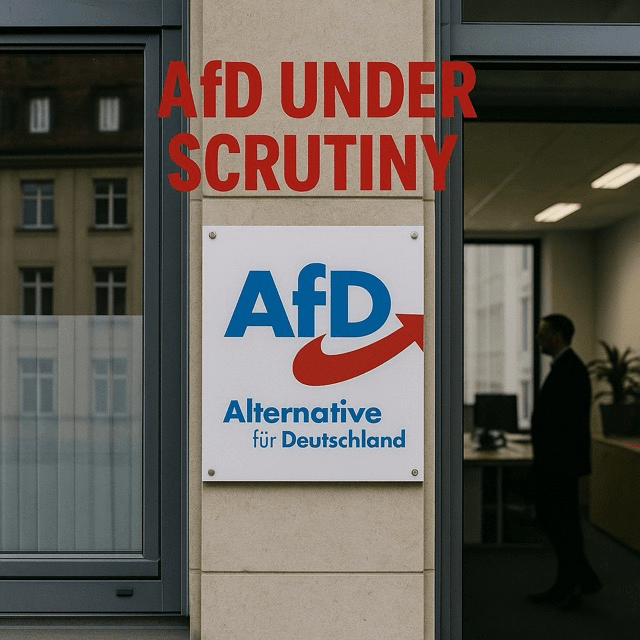
Germany’s domestic intelligence agency, the Federal Office for the Protection of the Constitution (BfV), has released a comprehensive report highlighting growing concerns about the far-right political party Alternative für Deutschland (AfD). The report underlines a significant shift in the agency’s assessment of the party’s activities and rhetoric, with potential implications for its future role in German politics.
One of the most striking points in the report is the classification of the AfD’s youth wing, Junge Alternative, as an extremist organization. According to the BfV, this group exhibits clear anti-democratic tendencies, promotes xenophobic ideologies, and has been linked to known far-right networks. This designation permits enhanced surveillance, including phone tapping and informant recruitment.
The report also places the AfD’s most influential faction, “Der Flügel” (The Wing), under continued observation, citing efforts to undermine democratic institutions and foment anti-constitutional sentiments. Though officially dissolved in 2020, Der Flügel’s ideological influence remains evident in the party’s leadership and policy direction.
Among the key issues identified are AfD’s repeated attacks on the free press, dissemination of conspiracy theories, and delegitimization of democratic processes, including the judiciary and electoral integrity. These tactics, the BfV argues, align with broader far-right strategies aimed at eroding public trust in liberal democratic institutions.
Of particular concern is the AfD’s stance on immigration and integration. The party’s rhetoric, frequently described in the report as racially charged and exclusionary, is accused of fostering an environment of hostility and fear among minority communities. This includes the propagation of the so-called “Great Replacement” theory, which falsely alleges that European populations are being systematically replaced by non-European migrants.
The report further highlights efforts by AfD members to establish informal networks with extremist groups both domestically and abroad. While some of these connections are loosely affiliated, the BfV warns of a potentially coordinated attempt to normalize radical ideologies within parliamentary discourse.
Despite these findings, AfD leaders have dismissed the report as politically motivated, accusing the intelligence services of bias and attempting to interfere with democratic competition. However, legal experts and watchdog organizations have expressed support for the BfV’s approach, citing the importance of defending constitutional values.
The publication of this report is likely to intensify political debate in Germany, especially as the country approaches upcoming elections. The extent to which AfD’s growing popularity can coexist with democratic norms remains a pressing question for German society.




 The Tower Post