Beijing Cautions London Over Trade Deals with the U.S. That May Harm Chinese Interests
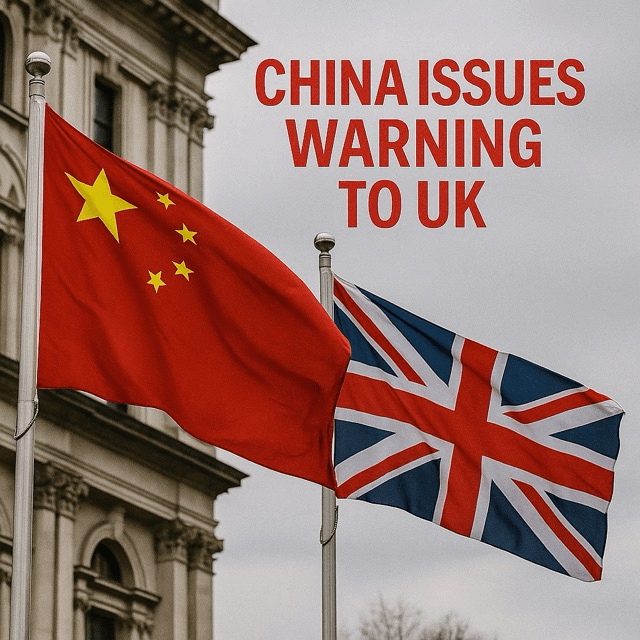
In a tense moment for international trade diplomacy, China has issued a strong warning to the United Kingdom, cautioning against entering into trade agreements with the United States that could potentially compromise Chinese interests. The warning, delivered through official diplomatic channels in Beijing, underscores growing friction as global powers navigate increasingly complex economic alliances.
Chinese officials expressed concern that emerging trade negotiations between the UK and the US may include provisions targeting key Chinese sectors, such as technology, telecommunications, and strategic infrastructure. Of particular focus are potential clauses that could restrict the UK’s engagement with Chinese firms like Huawei or limit cooperation in emerging technologies, including artificial intelligence and green energy.
A spokesperson for the Chinese Ministry of Foreign Affairs stated, “We urge the British side to uphold its commitment to an open, fair, and non-discriminatory trade environment. Any trade agreement that undermines China’s legitimate rights and interests will inevitably affect bilateral relations.”
The UK, post-Brexit, has been seeking to expand its global trade footprint, with a major priority being a comprehensive free trade agreement with the United States. However, the geopolitical landscape has complicated these ambitions. The U.S. has increasingly prioritized strategic competition with China, advocating for trade pacts that include security-related provisions and promote supply chain decoupling from Beijing.
British officials, while not responding directly to the Chinese warning, have emphasized the UK’s sovereign right to pursue independent trade policies. “Our goal is to secure high-standard agreements that benefit the British economy and support our global values,” said a senior UK trade official.
The incident reflects the increasingly difficult balancing act faced by countries caught between the world’s two largest economies. For the UK, aligning more closely with Washington could bolster transatlantic ties and investment opportunities, but also risks provoking retaliation from Beijing—a key trading partner and investor in sectors such as finance, infrastructure, and higher education.
Analysts warn that China’s warning may be a prelude to more assertive economic measures if it perceives the UK as moving too closely into the U.S. strategic orbit. This could include regulatory crackdowns on British firms in China, reduced investment flows, or diplomatic downgrades.
The broader implications of this standoff go beyond bilateral UK-China relations. It illustrates the growing pressure on middle powers to define their position in an emerging global order characterized by rivalry rather than cooperation. As the world’s economic and political center of gravity continues to shift, trade decisions are increasingly being viewed through the lens of security and influence.
As trade talks between the UK and US proceed, all eyes will be on how London navigates this diplomatic tightrope. A misstep could carry serious consequences—not just for the UK, but for the future of international economic diplomacy.




 The Tower Post