Macron Signals Openness to Deploying French Nuclear Weapons in Europe
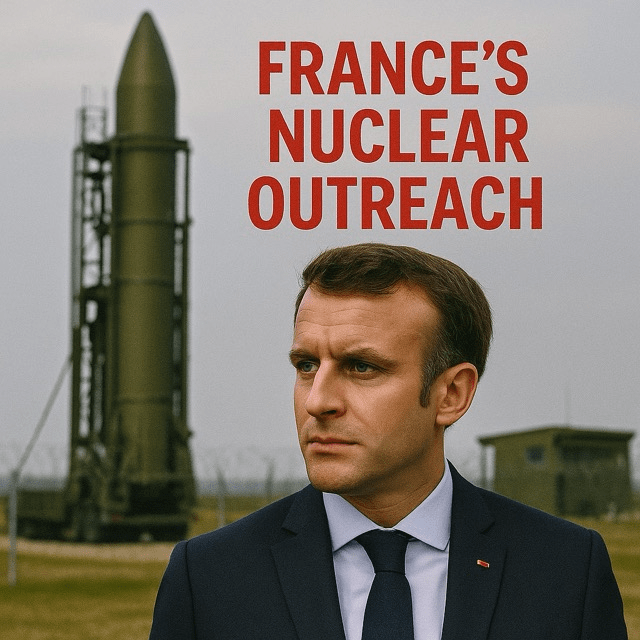
In a bold and potentially historic shift in European security policy, French President Emmanuel Macron has stated that France is open to the possibility of stationing its nuclear weapons in other European countries. The statement, delivered during a recent European defense summit, signals a willingness to rethink France’s traditionally guarded nuclear doctrine in light of growing geopolitical threats.
France is currently the only European Union member state with its own nuclear arsenal, and its force de frappe has long been considered a symbol of national sovereignty. However, with Russia’s continued aggression in Ukraine, increasing tensions with China, and waning confidence in the United States’ long-term commitment to NATO, European leaders are beginning to reassess their collective defense strategy.
Macron emphasized that such a deployment would not be unilateral. “We are prepared to consider new frameworks for nuclear deterrence, including consultations with our European allies,” he stated. “The goal is to enhance European security, not provoke conflict.”
This potential move comes amid a broader effort by Macron to position France as a leader in European defense autonomy. He has frequently advocated for a “European pillar” within NATO, and more recently, for the development of a truly European deterrence model that would reduce the continent’s dependence on American military infrastructure.
Reactions across the continent have been mixed. Some Eastern European nations, particularly Poland and the Baltic states, have welcomed Macron’s comments, viewing them as a strong signal of France’s commitment to European security. Germany, however, remains cautious, mindful of the domestic political sensitivities surrounding nuclear weapons. German officials have called for extensive dialogue within both the EU and NATO before any decision is made.
Critics argue that stationing French nuclear weapons outside its borders could escalate tensions with Russia and create divisions within the EU. They also warn that such a policy shift would require significant legal, logistical, and political coordination, including possible treaty revisions and parliamentary approvals.
Supporters counter that a more distributed nuclear posture would strengthen deterrence and demonstrate unity within Europe. They point to NATO’s existing nuclear sharing arrangements, which include U.S. nuclear weapons based in Belgium, Germany, Italy, the Netherlands, and Turkey, as precedent for such collaboration.
Strategic analysts suggest that Macron’s comments are as much about political signaling as they are about immediate military planning. By floating the idea, France is testing the waters and prompting a broader conversation on the future of European defense amid shifting global alliances.
Regardless of how the proposal unfolds, Macron’s openness to nuclear sharing marks a significant evolution in France’s strategic posture. It underscores the urgency with which European leaders are now approaching their defense responsibilities in a world where old certainties are rapidly dissolving.
 The Tower Post