How the Two Leaders Are Mocking Global Diplomacy While Fueling Ukraine’s Crisis
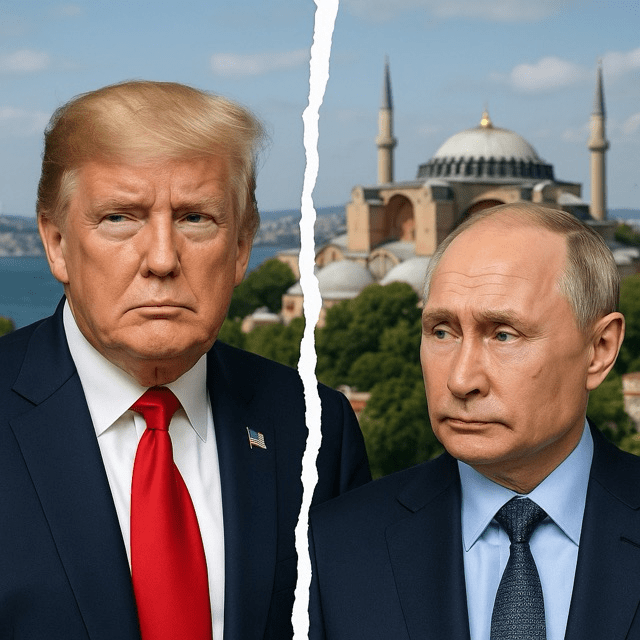
In a time when global unity and diplomacy are more vital than ever, the glaring absence of Donald Trump and Vladimir Putin at the recent Istanbul summit sent shockwaves through the international community. Their calculated decision not to attend is not merely a diplomatic slight — it is a deliberate move in a far more dangerous geopolitical game.
These two powerful figures, both known for their authoritarian inclinations and populist rhetoric, seem to be playing a duet of disruption on the world stage. By refusing to engage in multilateral dialogue, they are effectively undermining every effort made toward peace and cooperation. Their absence from Istanbul was not due to scheduling conflicts or trivial politics; it was a symbolic rejection of global consensus and a direct affront to the very notion of international collaboration.
But what is most alarming is the shared objective that appears to unite them: exacerbating the war in Ukraine and destabilizing President Volodymyr Zelensky’s government. Both Trump and Putin have, in their own ways, shown disdain for Ukrainian sovereignty. Putin’s motivations are overt — he seeks to reassert control over Ukraine, driven by a neo-imperialist vision of restoring Russian influence in the post-Soviet space. Trump, while more subtle, has consistently downplayed the threat of Russian aggression, criticized support for Ukraine, and even praised Putin’s “genius” at the onset of the invasion.
Their coordinated silence and strategic inaction are not mere coincidences. They are leveraging their influence — or lack thereof — to manipulate the narrative, frustrate diplomatic processes, and ultimately, to wear down the resilience of the Ukrainian people and their leaders. With every delay in negotiation, with every summit they shun, they inch closer to their shared goal: the political demise of Zelensky.
It is a cynical strategy, one that mocks the suffering of millions and toys with the stability of an entire region. The world cannot afford to treat their absence as a passive gesture. It must be seen for what it truly is — a dangerous performance of apathy designed to fracture alliances and embolden aggression.
The global community must stand firm in the face of such manipulation. Diplomacy cannot be held hostage by two men whose personal ambitions outweigh their respect for human life and international law. Their absence speaks volumes. It is time for the world to listen — and to act.


 The Tower Post