US Companies Partner with UAE and Saudi Arabia to Build Cutting-Edge AI Infrastructure

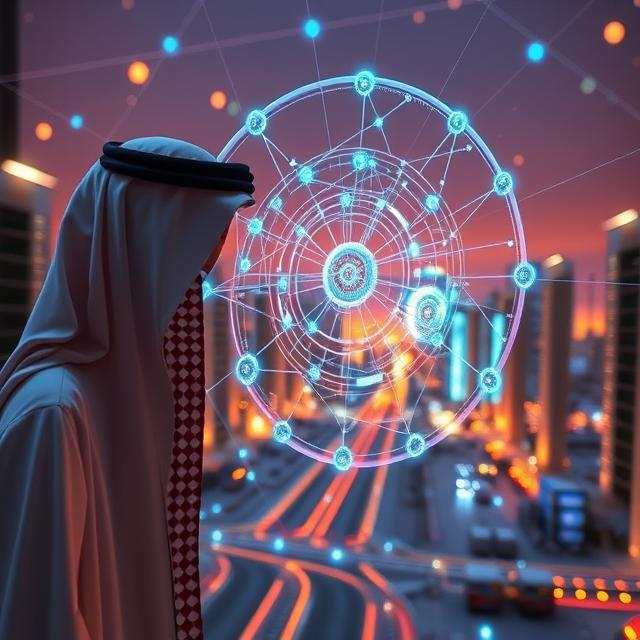
In a move that is set to reshape the global landscape of artificial intelligence, US companies have partnered with the United Arab Emirates (UAE) and Saudi Arabia to build the largest AI datacenter cluster outside of America. The deals, announced during a visit by US President Donald Trump to the Middle East, are designed to strengthen the global importance of American silicon and AI, while also helping nations like Saudi Arabia play a more significant role in the global race to develop and distribute cutting-edge technology.
According to sources, the UAE and Saudi Arabia will invest in massive AI computing capacity, with the UAE aiming to build five gigawatts of AI computing power and Saudi Arabia investing in 500 megawatts of capacity. The deals will involve several US companies, including Nvidia, AMD, Qualcomm, and AWS, which will provide the necessary infrastructure to train and power cutting-edge AI models.
The partnerships are seen as a significant shift in the global balance of power in AI, with the UAE and Saudi Arabia seeking to reduce their dependence on Chinese technology and instead build their own AI capabilities. The deals are also expected to strengthen the US dollar by building financial ties between the West and the Middle East.
However, experts warn that the deals come with significant risks, including the possibility of chips being smuggled into China or providing Chinese firms with access to large, cutting-edge computer clusters. There is also a risk that these countries may eventually become technological rivals with the US.
“The deals made this week are part of an effort to strengthen US techno-influence globally—particularly as it relates to China,” said Robert Tager, director of the Oxford Martin AI Governance Initiative at the University of Oxford. “There is this framing of a race against China on the one hand, and a sense that the US would like to be fundamental to the tech stack around the world.”
The UAE and Saudi Arabia have already made significant investments in AI research and development, with the UAE hiring prominent AI researcher Eric Xing to lead the Mohamed bin Zayed University of Artificial Intelligence and Saudi Arabia recruiting pioneer in modern AI Jürgen Schmidhuber to head up its own AI initiative.
However, the quality of AI research produced by these nations has been modest compared to the advancements coming out of the US and China. Having access to substantial AI computing power could accelerate the region’s progress, experts say.
“These aren’t your chips of yesterday, they are the next generation,” said Georgia Adamson, a research associate with the Wadhwani AI Center at the Center for Strategic and International Studies. “It is incredibly interesting in terms of the capabilities they are going to get out of this.”
The deals are also seen as a response to the US-China trade war, which has made it more expensive for companies to build AI infrastructure. The development of AI hardware and infrastructure may be further complicated by the trade war, experts warn.
In the end, the Middle East’s AI awakening is set to have significant implications for the global balance of power in AI, with the UAE and Saudi Arabia seeking to play a more significant role in the development and distribution of cutting-edge technology.