The Former President’s Controversial Move Sparks Global Debate
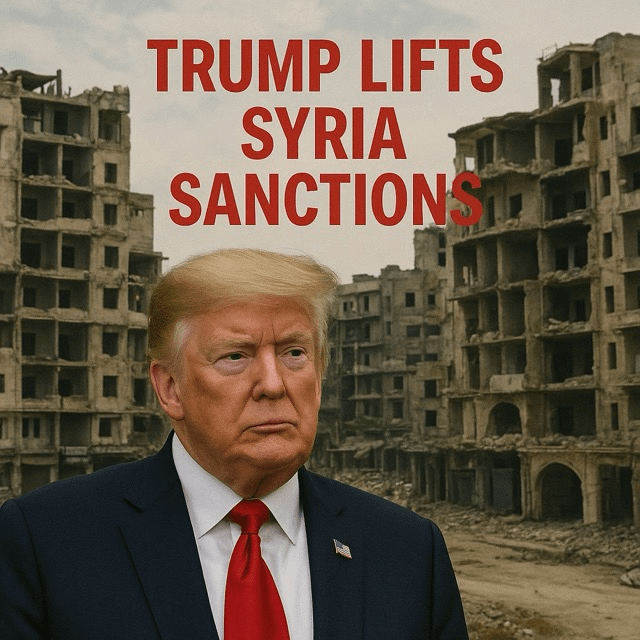
In a controversial and unexpected decision, former U.S. President Donald Trump has reportedly lifted key economic sanctions on Syria, igniting debate in Washington and among international allies. The move reverses several years of punitive measures aimed at isolating the regime of President Bashar al-Assad over its human rights abuses, military aggression, and use of chemical weapons during the Syrian civil war.
Trump, known for his “America First” foreign policy, defended the decision as a pragmatic step towards re-engaging with the Middle East and focusing on domestic priorities. “We’ve spent enough time and money policing the world,” he said during a press briefing. “It’s time to end these endless conflicts and bring stability through strength and dialogue.”
The sanctions in question targeted Syrian government officials, state-owned entities, and sectors such as oil, construction, and finance. Originally imposed under the Caesar Syria Civilian Protection Act of 2019, they were intended to pressure Assad’s regime into negotiating a political settlement and halting human rights violations. Critics argue that lifting these sanctions not only undermines justice for Syrian victims but also sends a dangerous message to authoritarian governments.
Reactions from the international community were swift. European allies, particularly France and Germany, expressed dismay over the decision, emphasizing that sanctions remain a crucial tool for accountability. Human rights organizations condemned the move as premature and potentially harmful to Syria’s civil society. “This is not the time to reward a regime with a history of atrocities,” said a spokesperson for Amnesty International.
Supporters of the decision, including some policymakers and business groups, argue that sanctions have failed to achieve their goals and have disproportionately hurt ordinary Syrians. They point to the worsening humanitarian crisis in Syria, where millions remain displaced and reliant on aid, as evidence that economic pressure has not translated into political change.
Analysts suggest Trump’s move may be driven by broader geopolitical calculations. With China and Russia expanding their influence in the region, re-engaging Syria diplomatically and economically could be a strategy to counterbalance rivals and regain leverage. Others see it as a legacy-oriented move, positioning Trump as a dealmaker willing to challenge conventional policy.
Nonetheless, the decision has reignited fierce debate within the U.S. Congress. Lawmakers from both parties have questioned the timing and legality of the move, and calls for hearings have emerged. Some are even proposing new legislation to reinstate the sanctions or tighten oversight on executive foreign policy powers.
The lifting of sanctions marks a turning point in U.S.-Syria relations, with potential ripple effects across the Middle East. Whether it leads to renewed diplomacy or emboldens authoritarianism remains to be seen—but for now, the world is watching.


 The Tower Post