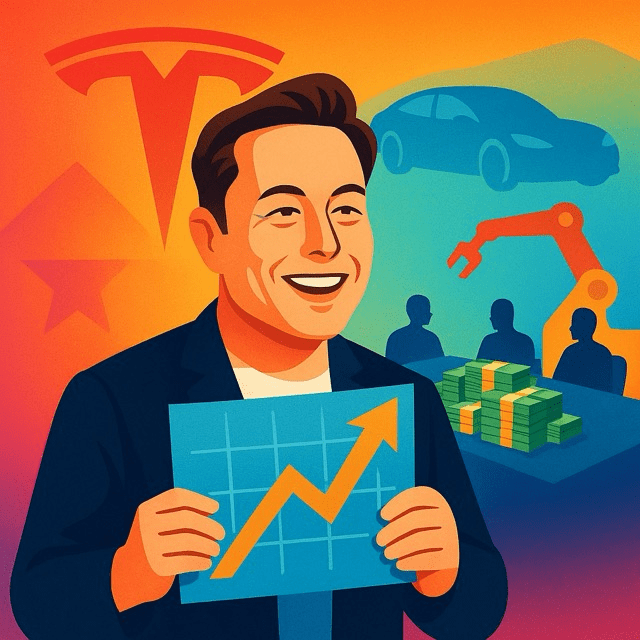
When a Delaware chancery judge voided Elon Musk’s headline‑grabbing 2018 compensation award in early 2024—calling its US $56 billion maximum value “an unfathomable sum”—she sent two messages: the board’s independence had failed, and shareholders deserved a say in how visionary leadership is rewarded. Fifteen months later those echoes still shape Tesla’s governance debate. On 14 May 2025 the board established a two‑member *special committee*—chair Robyn Denholm and independent director Kathleen Wilson‑Thompson—to craft a brand‑new pay package for Musk and gauge whether investors will tolerate another outsized bet on his ambition.
Why the spotlight is harsher than ever
**Legal after‑shock.** Musk’s appeal of the Delaware decision is pending; if he loses, Tesla must reverse roughly US $50 billion in previously expensed compensation and retrieve 12 tranches of voided options—an accounting nightmare that could spook debt covenants.
**Proxy‑advisor pressure.** ISS and Glass Lewis have warned that any new award “exceeding peer norms” will trigger *against* recommendations unless paired with airtight performance triggers ahead of the 13 June annual meeting.
**Texas relocation.** Investors approved reincorporation to Texas, whose statutes give fewer precedents on minority rights, so the committee must prove the new process is stricter, not looser.
What’s on the table
Early drafts point to a hybrid scheme—options plus RSUs—anchored to two performance rails:
**Market value:** vesting begins only after Tesla sustains a *US $1.5 trillion* market capitalisation for 90 consecutive trading days.
**Operational heft:** partial vesting tied to cumulative delivery of *20 million electric vehicles* or a fixed earnings‑before‑tax margin in the robotics and energy divisions.
Musk, who owns roughly 13 percent of Tesla, has floated a non‑negotiable demand: raise his stake to at least 25 percent through option vesting so he can “steer AI, Dojo and Optimus without takeover fears.” Some institutional holders bristle, arguing that concentrated power redraws the board’s risk map.
Voices from both camps
“We back founder pay for founder performance, but we want cap‑weighted guardrails that do not rocket beyond top‑quartile practice,” says Anne Simons, governance chief at CalPERS. By contrast, retail champion Ross Gerber tweets, “You don’t bench Steph Curry in the fourth quarter—pay the man for winning the game.”
Risks and rewards for shareholders
1. Execution focus vs. hype drift — Ever‑higher market‑cap hurdles may push leadership toward publicity cycles instead of supply‑chain fundamentals.
2. Founder flight — Musk has threatened to “develop super‑AI outside Tesla” if the award is too restrictive; losing him could forfeit first‑mover advantage in robotics.
3. Litigation round two — Any hint of board capitulation could unleash new derivative suits in Texas courts, prolonging uncertainty.
Next stop: the annual meeting
The special committee promises a completed term sheet by late May, giving institutions three weeks to scrutinise details before the 13 June shareholder meeting. Analysts at Wedbush label the timeline “aggressive but feasible,” warning that failure to craft a shareholder‑friendly deal could shave 10–15 percent off Tesla’s share price in one session.
Ultimately, the choice balances two truths: visionary CEOs are scarce, and unchecked incentives distort accountability. Whether investors still believe unprecedented innovation warrants unprecedented pay will determine not just Musk’s next payday, but the future template for Silicon Valley founder remuneration.


 The Tower Post