Emerging Powers Aim to Cement Their Global Influence Through Coordinated Policies
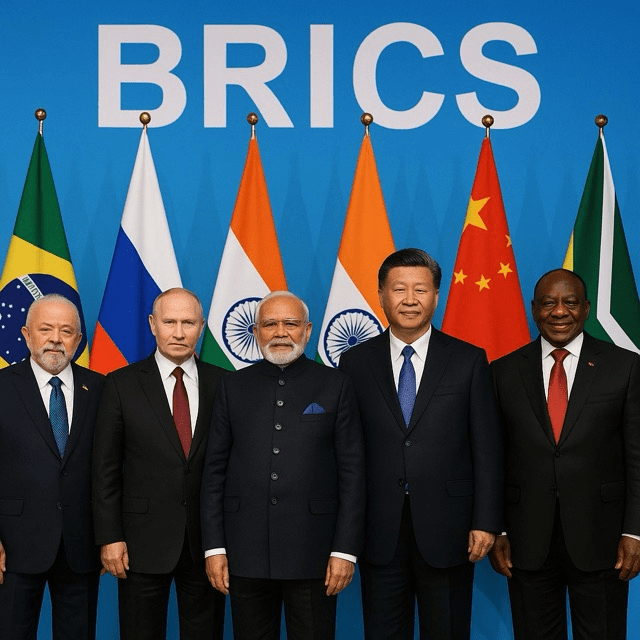
As the global balance of power shifts, the BRICS nations—Brazil, Russia, India, China, and South Africa—are advancing a bold initiative to unify their political strategy and present a coordinated front on the world stage. What began as a loose economic alliance has steadily evolved into a platform of geopolitical significance, with member states now seeking to amplify their influence through shared political goals.
At recent summits, leaders of BRICS have emphasized the importance of crafting a common base for political strategy. This initiative is not merely symbolic. It reflects a desire to challenge the dominance of Western-led institutions, such as the G7 and NATO, and to assert the group’s vision for a more multipolar world order.
The new strategy revolves around core principles: sovereignty, non-interference, multilateralism, and the reform of international governance structures. These themes resonate strongly among member countries, many of which have voiced frustration with what they perceive as Western double standards and selective application of international law.
Russia and China, in particular, are pushing for BRICS to become more assertive in matters of global security. They propose the establishment of alternative diplomatic forums and even military cooperation frameworks to counterbalance the influence of traditional Western alliances. Meanwhile, India and Brazil, more moderate in tone, stress the need for economic integration and sustainable development to be central pillars of the group’s expansion.
The expansion of BRICS to include new partners—such as Argentina, Iran, and potentially Saudi Arabia—signals a shift from a primarily economic bloc to a political alliance with real global ambitions. Coordinating political strategies across such diverse regimes will not be without friction, yet the shared interest in challenging Western hegemony continues to serve as a unifying thread.
Critics argue that differences in political systems and national interests could limit BRICS’ ability to act cohesively. Nonetheless, the group’s momentum appears strong. Initiatives such as the New Development Bank and the promotion of local currency settlements are concrete steps toward reducing dependency on Western financial institutions.
What remains to be seen is whether this evolving alliance can maintain unity amid rising global tensions. If successful, BRICS could redefine the rules of global governance in the 21st century—not as an alternative to the West, but as a parallel force reshaping diplomacy, development, and power.
The age of Western unipolarity is being challenged. In its place, the BRICS vision of a multipolar, inclusive global system is beginning to take shape.


 The Tower Post