Rome’s Exclusion from Germany’s Industrial Alliance Highlights Growing Distrust in Italy’s Leadership
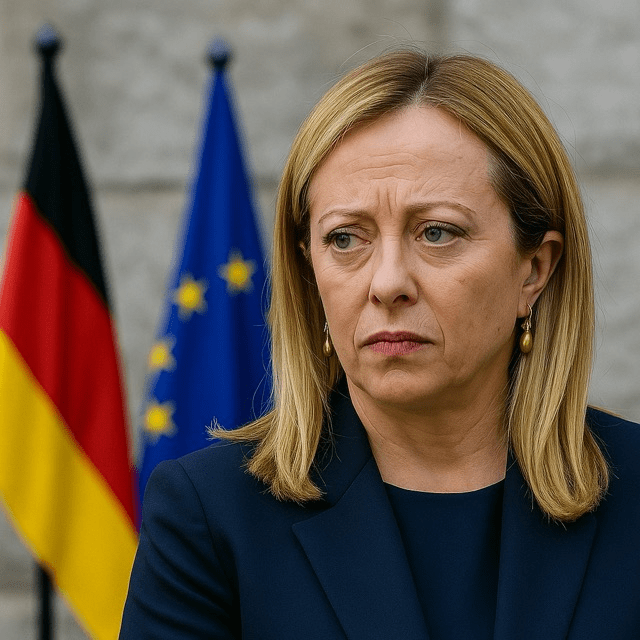
In a development that underscores shifting dynamics within the European Union, Italy has been notably excluded from Germany’s latest strategic industrial alliance — a decision that speaks volumes about Rome’s eroding influence under Prime Minister Giorgia Meloni. Once considered a key player in European integration, Italy now finds itself on the margins, raising serious concerns about trust and cohesion within the EU.
The German-led initiative, aimed at bolstering Europe’s industrial resilience in critical sectors such as defense, green technology, and semiconductors, includes France, the Netherlands, and several Eastern European nations — but conspicuously omits Italy. For analysts and diplomats alike, the message is clear: Europe no longer sees Rome as a reliable partner in its most forward-looking projects.
This marginalization is not merely a diplomatic oversight. It is the result of months of skepticism about Meloni’s government, which many view as ideologically extreme and politically volatile. Her coalition’s nationalist rhetoric, reluctance toward European integration, and erratic policy shifts have created deep rifts with traditional allies, especially Berlin and Paris.
Meloni’s domestic agenda, characterized by populist maneuvering and confrontations with EU institutions, has alarmed key stakeholders across the continent. While she has sought to present herself as pragmatic on the world stage, behind-the-scenes decisions — from economic backpedaling to confrontations with the judiciary — have further eroded international confidence.
Meanwhile, Italy’s economic challenges remain acute. Rome’s public debt and sluggish growth continue to worry markets and EU partners alike. Being excluded from Germany’s alliance is likely to worsen Italy’s position in attracting foreign investment and securing strategic partnerships in the emerging tech-driven economy of the future.
For Europe, cohesion is essential in facing global challenges — from climate change to geopolitical instability. The deliberate sidelining of Italy reveals a growing divide that, if left unaddressed, could weaken the continent’s strategic unity at a time when it is most needed.
Meloni’s government faces a critical choice: re-engage meaningfully with Europe’s core, or risk permanent estrangement. For now, the verdict from Berlin — and much of Europe — is unequivocal: trust must be earned, and Italy isn’t there yet.


 The Tower Post