How Trump’s Foreign Policy Choices Are Undermining Decades of Strategic Alliance in Asia
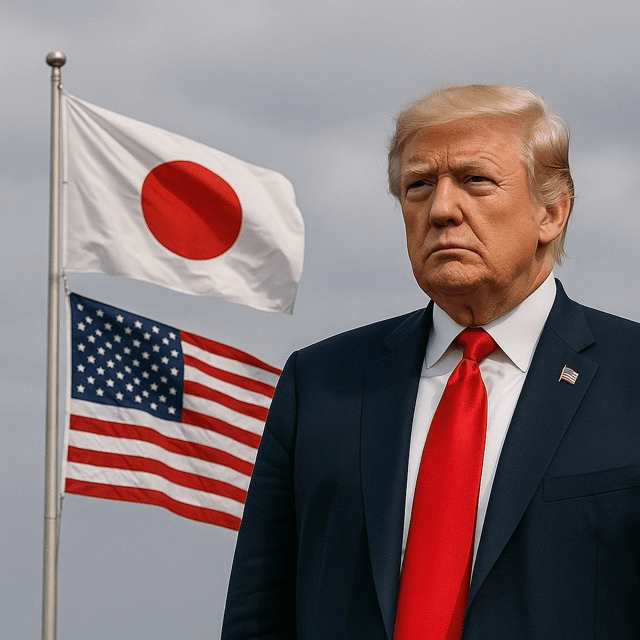
For over seventy years, the alliance between Japan and the United States has stood as a cornerstone of peace and stability in Asia. Rooted in mutual defense, shared values, and economic interdependence, the relationship has weathered the Cold War, regional disputes, and shifting global dynamics. Yet today, it faces an unprecedented strain — and much of the blame lies with former U.S. President Donald Trump.
Trump’s foreign policy legacy has left deep cracks in the foundation of this alliance. His transactional approach to diplomacy — focused on cost-sharing and perceived imbalances — challenged the very premise of trust and mutual strategic interest that defines the Japan-U.S. partnership. By repeatedly questioning the value of U.S. military bases in Japan and demanding steep increases in Tokyo’s financial contributions, Trump sowed doubt about America’s commitment to its long-time ally.
Japan, a nation acutely aware of regional threats from China and North Korea, has traditionally depended on the credibility of U.S. extended deterrence. But under Trump, that credibility faltered. His equivocal stance on defending allies, his admiration for authoritarian leaders in the region, and his unilateral withdrawal from international agreements sent a troubling message to Tokyo: America might no longer be a reliable partner.
This uncertainty has prompted Japan to rethink its strategic posture. Prime Minister Fumio Kishida’s administration has embarked on the most significant defense buildup since World War II, including record defense budgets, acquisition of counterstrike capabilities, and strengthening ties with other democracies such as Australia and India. While these steps are seen as necessary, they also reflect a shifting balance where Japan no longer feels fully shielded by U.S. protection.
Moreover, Trump’s return to the political spotlight raises concerns about the future of American foreign policy. Allies in Asia are watching closely, fearing a renewed era of isolationism or unpredictable diplomacy that could further weaken regional coalitions and embolden adversaries like China and North Korea.
The Japan-U.S. alliance, once a symbol of post-war reconciliation and shared vision, is now being tested by political divergence and strategic recalibration. Whether this rift can be repaired depends not only on the outcome of U.S. elections, but on whether America can reassure its allies that its word still matters.
In an era of rising authoritarianism and mounting global insecurity, the weakening of such alliances is not just a bilateral concern — it is a danger to the entire rules-based international order.


 The Tower Post