Exploring the Drivers, Challenges, and Future Outlook of Two Leading European Agricultural Economies
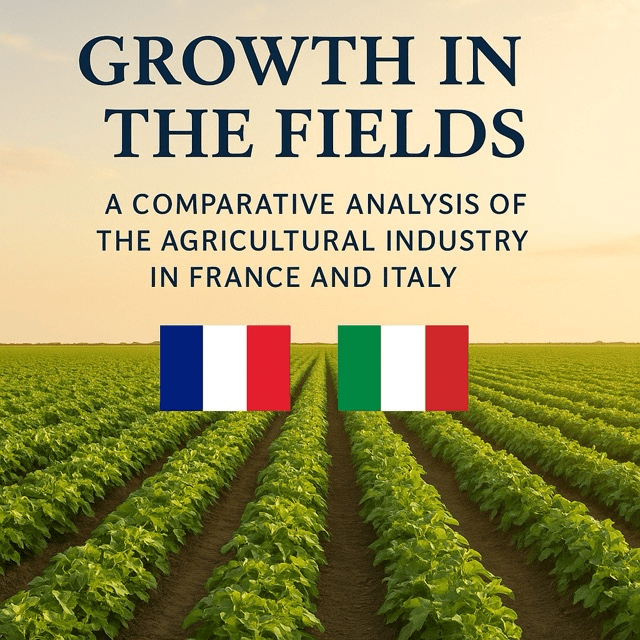
France and Italy, two pillars of European agriculture, have long been recognized for their fertile lands, diversified outputs, and rich culinary traditions. Yet despite their shared prominence, the trajectories of their agricultural industries reveal notable differences in strategy, innovation, and growth.
**France: Scale and Structure**
France holds the title of the largest agricultural producer in the European Union. With vast arable land and a well-developed agro-industrial sector, French agriculture has maintained consistent growth. Key factors include extensive government support, strong cooperatives, and advanced mechanization. The French government invests heavily in modernization programs, and the country’s Common Agricultural Policy (CAP) implementation has historically favored efficiency and export-oriented production.
France leads in cereal production, dairy, and wine exports. Its large-scale farms and agri-tech investments have enabled higher productivity. The rise of vertical integration in the food supply chain, particularly in meat and dairy sectors, has helped stabilize farm incomes and enhance competitiveness.
**Italy: Quality Over Quantity**
Italy, while smaller in overall output, focuses on quality, regional identity, and high-value agricultural products. From olive oil and wine to specialty cheeses and artisanal produce, Italian agriculture leverages its biodiversity and heritage to sustain growth.
The Italian agricultural sector is dominated by small and medium-sized family farms. While this poses scalability challenges, it also strengthens Italy’s position in the global market for organic, protected designation of origin (PDO), and niche products. Agritourism and direct-to-consumer models have expanded significantly, linking agriculture to tourism and lifestyle branding.
**Innovation and Sustainability**
Both countries are investing in sustainable agriculture, though their approaches differ. France emphasizes technological innovation, with precision farming, data analytics, and sustainable pesticides gaining ground. Italy, meanwhile, leads in organic farming by land area and has seen rapid adoption of eco-certification practices.
Climate change impacts are being felt in both countries—droughts, floods, and shifting growing seasons are prompting new research and adaptation strategies. France has responded with agroforestry projects and irrigation modernization, while Italy has increased investment in drought-resistant crops and soil regeneration.
**Labor and Policy Challenges**
France faces labor shortages and demographic aging among farmers, prompting debates about automation and workforce migration. Italy struggles with bureaucratic barriers, fragmented land ownership, and irregular labor practices—especially in the south.
Both governments have increased digital support for farmers and rural development funds, but EU reforms and market volatility remain pressing concerns.
**Conclusion**
France and Italy showcase two models of agricultural growth: France with its efficiency-driven, export-oriented scale; and Italy with its culture-rich, high-value craft. Together, they illustrate the diversity and resilience of European agriculture—each responding to market pressures, environmental change, and consumer demand in distinct yet complementary ways.




 The Tower Post