Tradition, Innovation, and Global Demand in a Changing Timekeeping Landscape
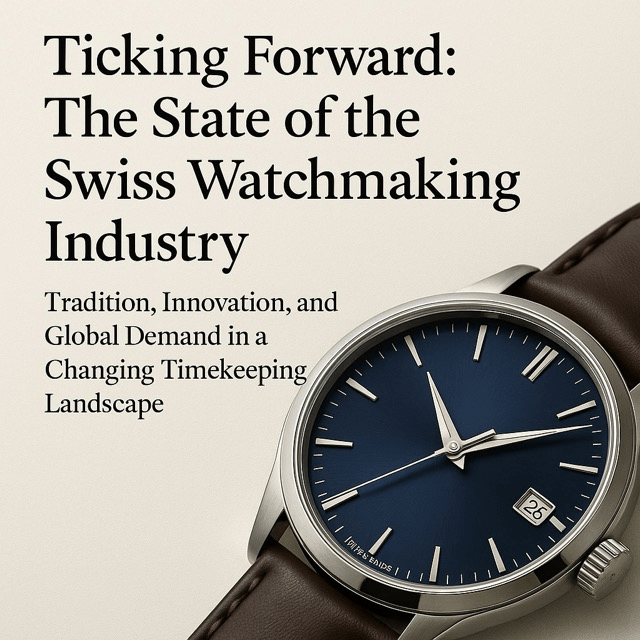
Switzerland’s watchmaking industry has long been a symbol of precision, luxury, and heritage. From the alpine valleys of the Jura to the showrooms of Geneva, Swiss watches command global admiration. But as the world changes, the watch industry is evolving—facing new challenges while finding fresh momentum.
**A Tradition of Excellence**
Switzerland remains the undisputed global leader in high-end mechanical watches. Brands like Rolex, Patek Philippe, Omega, Audemars Piguet, and TAG Heuer represent the pinnacle of craftsmanship, commanding high prices and long waitlists. The Swiss model blends artisanal skill with cutting-edge engineering, ensuring its legacy as a gold standard.
The heart of the industry lies in regions like Neuchâtel, Biel/Bienne, and Geneva, where thousands of skilled workers produce watches that often become heirlooms. The Federation of the Swiss Watch Industry (FH) estimates that over 50,000 people are employed directly in the sector.
**Resilience in the Face of Crisis**
The COVID-19 pandemic disrupted production and demand, but Swiss watchmakers have rebounded impressively. Exports reached record highs in 2023, driven by robust demand in the U.S., China, and the Middle East. High-net-worth consumers continue to view Swiss watches not only as luxury items but also as investment pieces.
**The Smartwatch Challenge**
Despite this success, the industry faces a generational shift. Smartwatches, led by Apple and Samsung, have captured younger consumers seeking multifunctional wearables. Swiss brands initially hesitated but are now adapting, with hybrid models and collaborations entering the market. The Swatch Group’s venture into smartwatch territory shows the industry’s attempt to blend heritage with tech trends.
**Sustainability and Innovation**
Environmental responsibility has become a key focus. Luxury brands are investing in sustainable sourcing of metals, transparent supply chains, and energy-efficient manufacturing. Companies like IWC and Panerai have launched models emphasizing recycled materials and environmental stewardship.
Innovation is also reshaping the art of horology. New materials like silicon components, anti-magnetic movements, and carbon-based cases are expanding design possibilities while improving durability and performance.
**A Global Market**
Switzerland exports nearly 95% of its watch production. Asia remains the largest market, with the U.S. rapidly growing. E-commerce has also transformed distribution, with digital boutiques and direct-to-consumer strategies becoming essential.
However, geopolitical tensions, inflation, and changing consumer habits continue to test resilience. Brands that maintain their identity while embracing modern expectations will lead the next chapter.
**Conclusion**
The Swiss watch industry is neither frozen in time nor racing blindly ahead. Instead, it ticks forward—deliberately, elegantly, and with a keen eye on the future. In a world that moves fast, the value of timeless craftsmanship endures.




 The Tower Post