An Exploration of Where and How Religion Still Drives Violent Conflict Today

While many modern wars are driven by geopolitics, resources, and power struggles, some conflicts continue to carry a powerful religious dimension. These are not always traditional “religious wars” in the historical sense, but conflicts where faith, identity, and theology deeply influence motivations, rhetoric, and the justification for violence.
Religious wars can emerge in several distinct scenarios:
1. **Sectarian Divides within Religions**: One of the most visible cases is the Sunni-Shia divide in the Muslim world. In countries like Iraq, Syria, and Yemen, sectarian tensions have turned political rivalries into deeply religious confrontations. Militias often draw legitimacy from theological claims, and foreign powers back factions aligned with their own sectarian leanings.
2. **Religious Nationalism**: In India, rising Hindu nationalism has fueled tensions with Muslim minorities, particularly in regions like Kashmir. Political movements often wrap themselves in religious identity, blurring the line between faith and state policy. Similar patterns can be seen in Myanmar, where Buddhist nationalism has contributed to the persecution of the Muslim Rohingya minority.
3. **Militant Religious Extremism**: Groups like ISIS, Boko Haram, and al-Shabaab explicitly define their struggles in religious terms. These actors seek not just political power, but a religious transformation of society, often invoking apocalyptic or theocratic visions. Their wars are both territorial and spiritual.
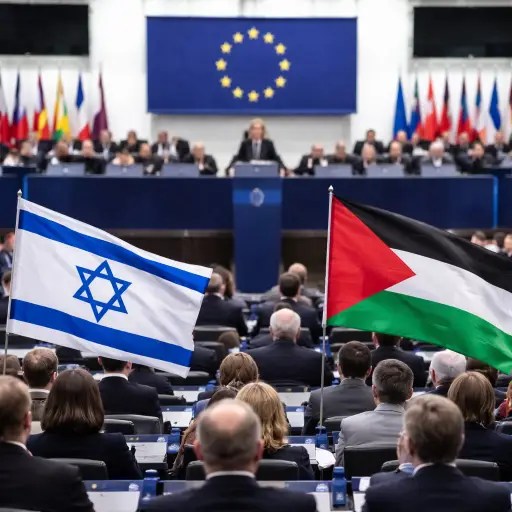
4. **Sacred Sites and Historical Grievances**: In Jerusalem, religious symbolism lies at the heart of the Israeli-Palestinian conflict. Although deeply political, disputes over access to and control of sacred places such as the Temple Mount/Al-Aqsa Mosque compound make religion inseparable from national identity.
5. **Theocratic Regimes and Exported Ideologies**: Iran and Saudi Arabia not only enforce religious governance domestically, but also engage in proxy conflicts abroad to spread their religious-political ideologies. These rivalries often turn local disputes into transnational religious wars.
6. **Religious Minorities and State Violence**: In places like Nigeria, Pakistan, and parts of Africa, minority religious groups frequently become targets of systemic violence, both by extremist factions and complicit governments. These persecutions often spark cycles of retaliation that escalate into broader conflict.
It’s important to recognize that while religion plays a role, it is rarely the sole cause of war. Religious language often overlays deeper grievances—economic inequality, historical trauma, colonial legacies, or identity politics. However, when faith becomes the vessel for these struggles, wars can become harder to resolve, as compromise in matters of belief is profoundly difficult.
In today’s world, religious conflicts demand nuanced responses that respect faith traditions while confronting radicalism, protecting minority rights, and promoting interfaith dialogue. Only through understanding and diplomacy can the flames of faith-fueled violence be cooled.


 The Tower Post