Sweeping legislation extends Israeli civil governance over Area C, igniting regional tensions and international condemnation.
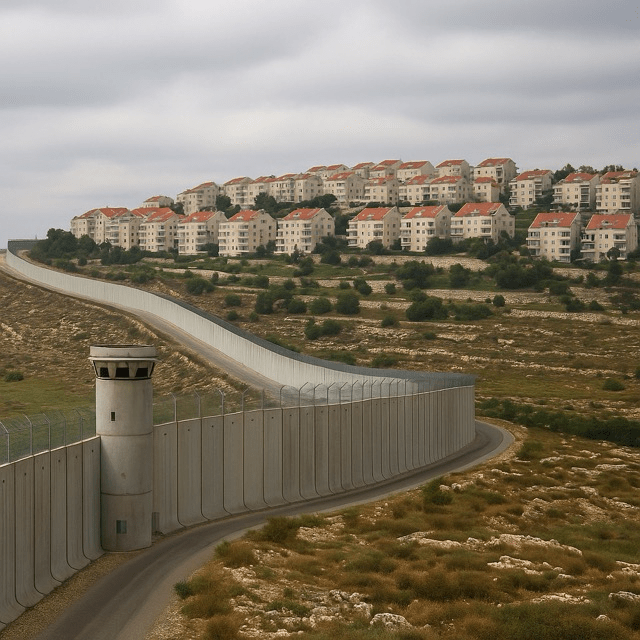
In a historic and highly contentious move, the Israeli Knesset has adopted a package of laws that place roughly 60 percent of the occupied West Bank—known as Area C—under direct Israeli civilian administration. The series of votes, finalized in the early hours of May 20 2025, effectively transfers authority over planning, zoning, and land registration from the Israeli military’s Civil Administration to relevant Israeli ministries, thereby integrating the territory’s governance structures with those within Israel’s pre‑1967 borders. The government insists the measure merely “regularizes” existing realities on the ground, yet critics regard it as a de facto annexation that threatens the prospect of a negotiated two‑state solution.
The legislative push accelerated over the past year. In April 2025, the Knesset passed the ‘Regional Governance Law,’ enabling settler‑run municipal councils to provide full civil services—including education, transportation, and utility regulation—without oversight from the military authorities. The law’s framers argued that settler communities of more than 200,000 residents had outgrown the constraints of the military system and required ‘normalized’ administration comparable to Israeli towns inside the Green Line. Israeli newspaper *Haaretz* described the bill as the culmination of a years‑long campaign by the pro‑settlement lobby to cement Israeli sovereignty in practice.
Just days later, the cabinet approved an order nullifying Palestinian land‑ownership claims that had not yet been entered into Israel’s registry, effectively granting the state exclusive discretion over unregistered parcels across Area C. Middle East Eye reported that the decision pre‑empts any future Palestinian effort to formalize property rights and opens the door for large‑scale settlement expansion .
Area C, which comprises the majority of the rural West Bank and encompasses virtually all existing Israeli settlements, was placed under temporary Israeli civil and military control as part of the 1995 Oslo II Accord. The agreement envisioned a phased transfer to Palestinian jurisdiction, but successive Israeli governments have argued that security concerns and Palestinian political fragmentation made the handover untenable. Today, more than half a million Israelis live in over 150 officially recognized settlements and dozens of wildcat outposts scattered across the territory.
Palestinian leaders condemned the Knesset’s decision as an ‘existential blow’ to the viability of a contiguous Palestinian state. Palestinian Authority President Mahmoud Abbas called the move ‘a declaration of permanent apartheid’ and urged the International Criminal Court to investigate its legality. Demonstrations erupted in Ramallah, Bethlehem, and Hebron, where hundreds of protesters clashed with Israeli security forces at checkpoints separating Areas A and C.
The international community reacted swiftly. The United Kingdom suspended free‑trade negotiations with Israel and imposed targeted sanctions on settler leaders responsible for land seizures, only hours after the Knesset vote. Foreign Secretary David Lammy accused Israel of violating fundamental tenets of international humanitarian law by unilaterally altering the status of occupied territory citeturn1news10. European Union High Representative Josep Borrell announced that the bloc would review aspects of its Association Agreement with Israel, while Canada hinted at similar measures should settlement expansion continue.
The Office of the UN High Commissioner for Human Rights reiterated that ‘annexation—whether de jure or de facto—is illegal under international law’ and urged Israel to reverse the legislation. A March 2025 report by the OHCHR already warned that Israel was ‘ramping up settlement activity and legal maneuvers in a manner incompatible with its obligations as an occupying power’ citeturn1search2.
Inside Israel, the package divided the political sphere. Right‑wing coalition parties hailed the vote as a ‘historic correction’ that affirms Jewish historical claims to Judea and Samaria. Finance Minister Bezalel Smotrich praised the measures for ‘finally ending the discriminatory dual‑regime’ under which settlers are subject to military bureaucracy. Opposition lawmakers, led by Yesh Atid’s Yair Lapid, decried the legislation as ‘reckless’ and predicted an explosion of international isolation similar to the fallout from Russia’s annexation of Crimea in 2014.
Legal experts anticipate a wave of petitions to Israel’s Supreme Court, which in recent months has shown greater willingness to scrutinize government decisions affecting the occupied territories. However, a controversial judicial‑override clause included in the new laws would require a super‑majority of 12 out of 15 justices to strike down any annexation‑related measure—an unprecedented threshold that critics say effectively shields the legislation from review.
On the ground, Israeli civil ministries are expected to begin issuing construction permits to settlement councils as early as June 2025. Human‑rights organizations predict a surge in demolitions of Palestinian structures deemed ‘unlicensed,’ particularly in the agriculturally rich Jordan Valley and the South Hebron Hills, where communities have spent decades seeking building approvals without success. In a statement, Israeli NGO B’Tselem argued that the administrative shift marks ‘the final nail in the coffin of the two‑state paradigm.’
Meanwhile, Washington offered a muted response. A State Department spokesperson reiterated the United States’ ‘long‑standing opposition to unilateral actions that prejudice final‑status issues,’ but the Biden administration stopped short of announcing punitive measures. Analysts note that domestic political pressures and the ongoing Gaza cease‑fire negotiations may explain the White House’s cautious approach.
Whether the new laws will produce immediate change or become mired in legal and diplomatic challenges remains uncertain. What is clear, however, is that the Knesset’s unprecedented assertion of civilian authority over most of the West Bank represents a watershed moment—one that could redefine the Israeli‑Palestinian conflict for years to come.



 The Tower Post