Discovery in Jalisco highlights growing crisis of mass disappearances, with over 120,000 missing in two decades
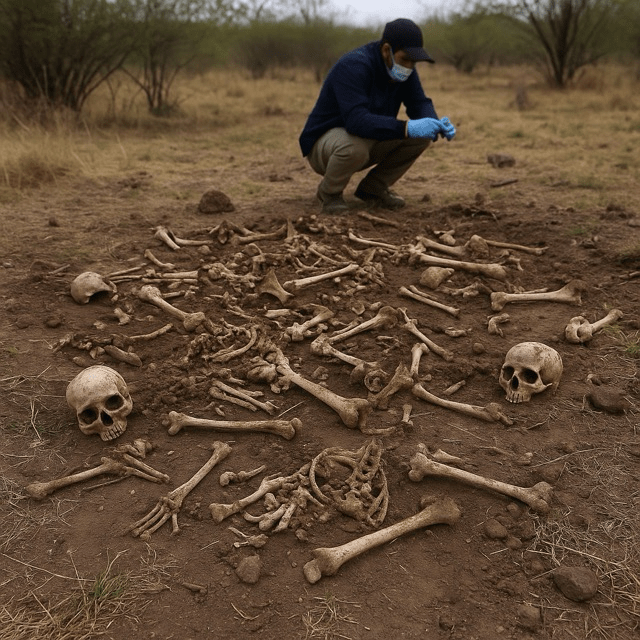
Authorities in Mexico have uncovered a horrific mass grave on a ranch in the western state of Jalisco, where the dismembered remains of at least 42 individuals were discovered in what investigators are calling a ‘death camp’ operated by a powerful drug cartel. The chilling discovery was made near the town of Tlajomulco de Zúñiga, an area long plagued by cartel violence and disappearances.
The remains were scattered across the expansive property, some buried in shallow pits, others hidden beneath charred rubble. Forensic teams have worked around the clock since the first remains were found on May 15, 2025, combing through the scorched terrain and collecting bone fragments and personal effects. Officials from the Jalisco State Prosecutor’s Office reported that identification efforts are ongoing, with DNA testing expected to take several weeks or months.
Local residents alerted authorities after a strong odor began emanating from the remote area. Security forces, accompanied by federal investigators, quickly cordoned off the ranch. Investigators believe the site functioned as an extermination and disposal facility used by the Jalisco New Generation Cartel (CJNG), one of the most feared and violent criminal organizations in the country.
This discovery has again cast a grim spotlight on Mexico’s ongoing crisis of forced disappearances. According to government statistics, more than 120,000 people have gone missing in the past two decades, many of them believed to be victims of cartel violence. Families of the missing, often organized into search collectives, have become a backbone of grassroots forensic investigations, scouring deserts, forests, and farmlands in search of their loved ones.
Alejandra Jiménez, whose brother vanished in 2019, told reporters at the scene, “We come here because we have no choice. The state doesn’t look for our dead.” She and others had joined the search collective that first flagged the Tlajomulco ranch as a possible clandestine grave.
President Andrés Manuel López Obrador expressed condolences but refrained from confirming cartel involvement. Human rights groups criticized the government’s response as slow and inadequate. Erika Guevara-Rosas, Americas Director at Amnesty International, stated, “This is not an isolated case—it is the symptom of a broader structural failure to protect life and dignity in Mexico.”
Mass graves are not new in Mexico. In 2011, over 190 bodies were found in San Fernando, Tamaulipas, and hundreds more have been discovered in Veracruz, Guerrero, and Michoacán. What sets the Tlajomulco case apart is the apparent use of a fully equipped site for torture, execution, and incineration—a level of brutality and infrastructure suggesting high-level impunity.
The U.S. State Department, which has sanctioned CJNG leaders in the past, issued a statement calling the discovery “a stark reminder of the urgent need for bilateral efforts to dismantle transnational criminal organizations.” The FBI has also offered to support Mexico’s forensic identification efforts, though no joint action has yet been confirmed.
Despite the national shock, many families remain skeptical that justice will be served. “We’ve seen these stories before,” said Maria Castillo, whose son disappeared in 2021. “The bodies are found, the case makes headlines, and then everything fades. We’re left waiting—sometimes forever—for answers.”
Experts warn that unless Mexico addresses impunity and strengthens its investigative capacities, the cycle of violence will continue. “We are witnessing the normalization of mass killing,” said sociologist Javier Oliva. “Without accountability, these death camps will continue to multiply.”
As night falls over the ranch in Jalisco, the air remains heavy with the stench of decay and despair. Yet searchers persist, scraping the earth for traces of the vanished—mothers, brothers, daughters, fathers—each fragment a testament to lives erased in the shadow war consuming the heart of Mexico.



 The Tower Post