New legislative package targets financial institutions, tech firms, and energy exports amid escalating tensions with Moscow
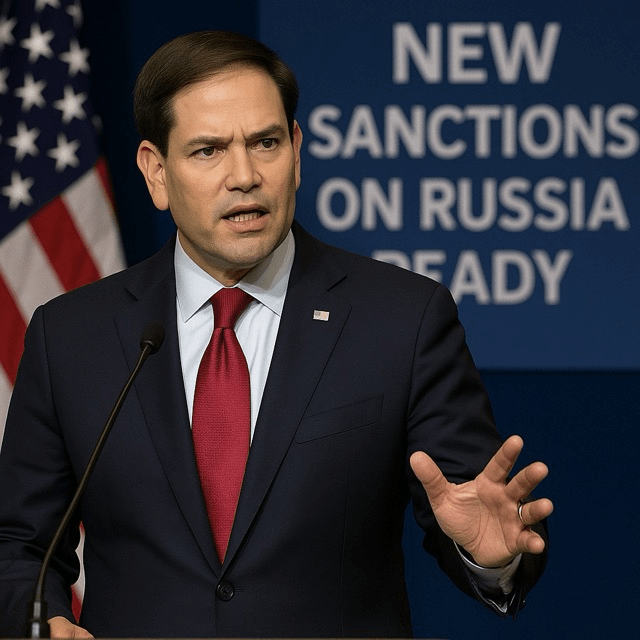
U.S. Senator Marco Rubio (R-FL) has announced that a new round of economic sanctions against the Russian Federation is finalized and ready for implementation, pending congressional approval. The proposed measures are part of a broader bipartisan effort to respond to what Rubio called ‘continued Russian aggression in Ukraine and global subversion of democratic values.’
Speaking at a press briefing on Capitol Hill on May 20, 2025, Rubio outlined a sanctions package aimed at crippling key sectors of the Russian economy, including finance, technology, and energy. The initiative, known as the “Russian Accountability and Democracy Act,” has already gained support from several senior lawmakers across party lines.
The legislation would impose stringent restrictions on Russia’s largest state-owned banks, cutting them off from the SWIFT international payment system and freezing assets held in U.S. jurisdictions. It also seeks to bar American and allied technology firms from supplying semiconductors and advanced software to Russian defense and aerospace companies.
“The message is simple,” Rubio stated. “If Russia continues to wage war and undermine the sovereignty of its neighbors, there will be serious consequences—economic and otherwise. These sanctions are not just symbolic; they are designed to strike at the core of the Kremlin’s strategic capabilities.”
The package includes a provision for sanctioning individuals involved in human rights abuses, cyberattacks, and election interference, expanding upon prior executive orders issued during the Biden administration. It also proposes targeted actions against entities supporting Russia’s military-industrial base and bypassing previous sanctions via third countries.
Rubio, a senior member of the Senate Intelligence and Foreign Relations Committees, emphasized that the sanctions are crafted to pressure the Putin regime without directly harming the Russian populace. “We are isolating oligarchs, cronies, and enablers—not ordinary citizens,” he said.
Russia’s foreign ministry swiftly condemned the proposed sanctions, calling them an act of economic warfare. In a statement, Kremlin spokesperson Dmitry Peskov warned that such moves would ‘permanently damage relations between Moscow and Washington’ and provoke retaliatory measures. Russia has already begun deepening financial ties with China and exploring alternate trade and payment routes to reduce dependency on Western systems.
The White House signaled cautious support for the legislation, noting that any new sanctions must be carefully coordinated with allies. National Security Advisor Jake Sullivan stated that the administration is ‘closely reviewing the Rubio package’ and remains committed to holding Russia accountable.
Experts say that while sanctions can inflict significant short-term damage, their long-term efficacy depends on global cooperation and enforcement. “Sanctions work best when there’s a united front,” said Maria Tsvetkova, an analyst at the Atlantic Council. “Rubio’s bill could be a strong tool—if European partners are on board.”
Human rights organizations welcomed the proposal, highlighting its focus on accountability. “These sanctions send a clear signal that war crimes and repression will not be tolerated,” said Kenneth Roth, former director of Human Rights Watch. “We urge swift passage and robust implementation.”
As the bill moves to committee review, Rubio expressed hope for rapid legislative action. “This is not a partisan issue. It’s a matter of national security and international law. We must act decisively.” The coming weeks will determine whether Congress delivers on that promise—and what message the U.S. sends to a world watching closely.


 The Tower Post