Deaths of Antonio Omar Dridi and Manuel Mameli reignite debate over foreign enlistment and Italy’s role in the war
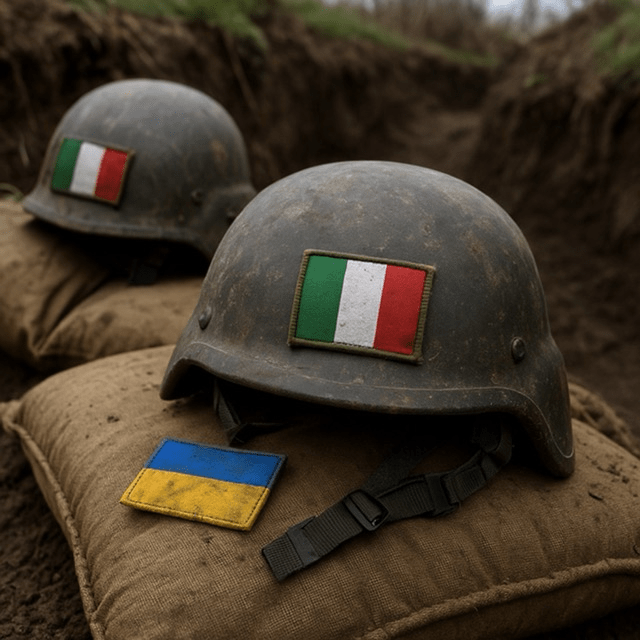
Kyiv & Rome — The Italian foreign‑affairs ministry on Wednesday confirmed that two Italian citizens serving with Ukraine’s International Legion have been killed in combat on the eastern front. Antonio Omar Dridi, 34, from Palermo, and Manuel Mameli, 25, from Cagliari, are the fifth and sixth Italians known to have died since the full‑scale Russian invasion began in February 2022.¹
Dridi had been listed as missing in action since 27 March, when shelling collapsed a bunker near the contested Donetsk‑Oblast town of Chasiv Yar. His death was announced in a social‑media post by the volunteer association “Memorial – International Volunteers for Ukraine,” which hailed him as “our beloved Italian brother” and asked supporters to “honour him so he is not forgotten.”²
Mameli disappeared on 18 May during a Russian drone strike outside Pokrovsk, 60 km northwest of the front‑line city of Avdiivka. Comrades told Italian diplomats that he was hit while attempting to move a wounded Ukrainian soldier to cover; his body could not be recovered because the area remains under Russian control.³
Italian Foreign Minister Antonio Tajani expressed condolences to the families and said consular staff were “working tirelessly to clarify the facts and, where possible, repatriate the remains.” Opposition parties seized on the news to demand tighter controls on would‑be volunteers, while veterans’ groups stressed that the men fought “on the right side of history.”⁴
Dridi and Mameli bring the unofficial tally of Italian combat fatalities in Ukraine to six and underscore the risks borne by the roughly 30–40 Italian citizens believed to be serving with Kyiv’s International Legion. The Legion claims volunteers from more than 50 nations and has suffered heavy losses along the sprawling 1,200‑km front line.
Under Italian law, fighting for a foreign army without state permission can carry a prison sentence of two to seven years, yet prosecutions remain rare. Legal scholars argue that Kyiv’s formal invitation to join the International Legion blurs the line between mercenary activity and legitimate enlistment.
Both families described their sons as idealists. Dridi, who had completed a tour with the Italian Army’s 2nd Alpine Regiment before working as an EMT in Milan, flew to Poland in March 2023 and crossed into Ukraine the same week. “He believed Europe’s freedom was at stake,” his sister Giulia told RAI News.
Mameli studied computer engineering but abandoned his degree after Russia’s 2022 invasion. In a February 2024 podcast he said he could not “scroll past genocide and do nothing.” Friends recalled his habit of carrying a Sardinian flag in his kit as a good‑luck charm.
In Kyiv, presidential adviser Mykhailo Podoliak praised the men’s “courage and solidarity,” noting that at least 20 foreign soldiers have been killed in 2025 alone. Ukrainian commanders say international volunteers fill critical gaps in medical evacuation, drone operations and language liaison with NATO units.
Back in Rome the deaths have reignited a heated debate. The far‑right League party is drafting a bill to ban travel to warzones without prior authorization, while centre‑left Democrats argue that criminalising volunteers would amount to “punishing conscience.” Polls show Italians split almost evenly over whether citizens should be allowed to fight abroad.
European officials worry that the trickle of foreign casualties could erode public support for long‑term aid to Kyiv. For now, however, the focus is on two fallen Italians whose personal convictions led them far from home—and into the deadliest ground war on the continent in generations.

 The Tower Post