New UNODC study links soaring illicit exports to cartel violence, environmental ruin and regional instability
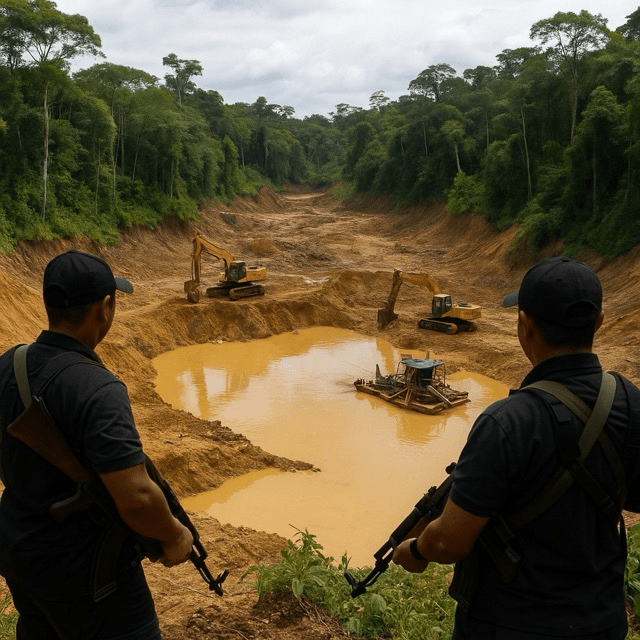
Quito — Criminal syndicates have seized effective control of large swaths of Ecuador’s booming gold sector, according to a United Nations Office on Drugs and Crime (UNODC) report released on 20 May 2025.¹ The 84‑page study says at least a third of the country’s bullion is extracted or trafficked by gangs tied to Mexican cartels and Venezuelan networks, eclipsing cocaine as Ecuador’s fastest‑growing illicit economy.
Researchers cite Los Lobos, Los Choneros and a splinter cell of Venezuela’s Tren de Aragua as the main armed actors forcing artisanal miners to pay “protection taxes,” laundering profits through shell export companies in Miami, Dubai and Istanbul.² Satellite imagery analysed by UNODC shows illegal pits expanding by 180 percent between 2020 and 2024 in the Andean province of Imbabura and the Amazonian cantons of Napo and Zamora‑Chinchipe.
Violence has spiked accordingly. The report attributes 312 homicides in mining zones last year to turf wars, including the November massacre of 18 workers at Buenos Aires mine. Environmental watchdog Amazon Watch says river mercury levels near the frontier town of San Lorenzo now exceed WHO safety limits by eight‑fold, threatening Afro‑Ecuadorian and Indigenous A’i Kofán communities.³
President Daniel Noboa, who took office pledging a “war on gangs,” declared a mining security emergency and requested intelligence support from the U.S. Southern Command and Europol.⁴ His administration unveiled a draft bill to track gold with blockchain‑based origin certificates, but lawmakers from the opposition Social Cristiano party warn that enforcement capacity is “woefully inadequate.”
Legitimate exporters fear collateral damage. Gold officially surpassed bananas as Ecuador’s second‑largest export in 2024, worth US $2.7 billion, yet the Central Bank estimates another US $1.4 billion left the country undeclared. Economists at the Universidad San Francisco de Quito say the illicit flow is inflating the dollarized economy and fuelling record‑high money laundering through real‑estate deals in coastal resort towns.
UNODC analysts warn that the ecological toll could prove irreversible: some 1,600 hectares of primary rainforest were cleared for illegal pits in 2024 alone, releasing an estimated 2 million tonnes of carbon. The study details how cyanide tailings from rudimentary processing plants leach into tributaries feeding the Napo River, a key artery of the Amazon basin.
Indigenous federations, including the Shuar Arutam and CONFENIAE, have filed suits before Ecuador’s Constitutional Court demanding suspension of concessions overlapping ancestral lands. Tensions boiled over in March when Shuar protesters blocked the Pan‑American Highway for three days, prompting a militarized crackdown that left two civilians dead.
Security forces trumpet occasional successes: ‘Operation Condor’ in January arrested 76 suspects, freed 12 kidnapped miners and seized 120 kg of contraband gold near the Colombian border. But Interior Minister Mónica Paz concedes that “we are playing whack‑a‑mole,” as dismantled camps reappear deeper in the jungle within weeks.
Global ripple effects are mounting. The EU is weighing an import ban on conflict‑linked gold under its forthcoming Critical Minerals Act, while jewellers Tiffany & Co. and Pandora have instructed refiners to suspend new Ecuadorian lots pending traceability audits.
UNODC chief Ghada Waly called for a “whole‑of‑supply‑chain compact” that couples law‑enforcement with viable livelihoods for miners. Without such measures, she warned, Ecuador risks trading one resource curse—the cocaine corridor—for another glittering, yet equally deadly, vein of gold.




 The Tower Post