North Africa’s Migrant Trafficking Crisis and the Struggle for Control
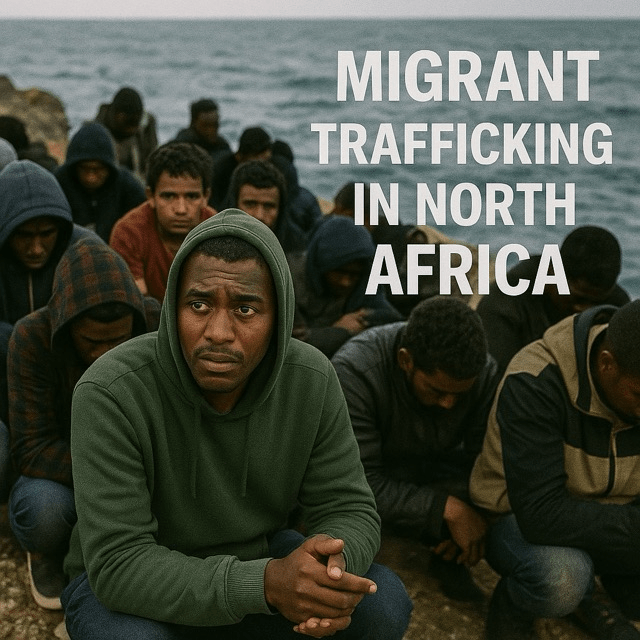
North Africa remains a focal point in the global migrant crisis, acting both as a departure zone and a trafficking hub for thousands of people seeking entry into Europe. The region, plagued by political instability, weak border control, and criminal syndicates, has seen an alarming surge in human trafficking operations over the past decade.
From the shores of Libya to the borderlands of Tunisia, Sudan, and Algeria, migrant routes are often controlled by heavily armed traffickers who prey on desperation. Many migrants, fleeing war, persecution, and poverty in Sub-Saharan Africa, pay exorbitant sums to secure passage across the Mediterranean. The journey is often perilous, involving crowded trucks, unsafe boats, and inhumane detention centers along the way.
In Libya, the collapse of centralized governance has created a fertile environment for trafficking networks. Militias and criminal groups operate with near impunity, detaining migrants in makeshift prisons where abuse, extortion, and even slavery have been documented. The United Nations and international NGOs have repeatedly condemned the conditions, yet meaningful intervention remains elusive.
Meanwhile, Tunisia and Algeria serve as both transit points and sources of migration. Rising unemployment, political frustration, and social unrest are pushing more North Africans to seek life elsewhere, often through irregular channels. This has further strained the region’s already fragile infrastructure and inflamed anti-immigrant sentiments both locally and in Europe.
The European Union has poured millions into partnerships with North African states to curb irregular migration. These deals have included training border guards, providing surveillance technology, and funding repatriation efforts. However, critics argue that these measures often overlook the humanitarian crisis on the ground, prioritizing border security over migrant rights and safety.
Migrant deaths in the Sahara desert and the Mediterranean Sea continue to rise. Bodies are routinely discovered in desert expanses or recovered from capsized vessels off the North African coast. Survivors recount harrowing experiences of betrayal, theft, violence, and abandonment by traffickers.
Women and children are particularly vulnerable. Many fall victim to sexual exploitation and trafficking for forced labor. Shelters are scarce, and those that exist are overwhelmed. International aid groups working in the region often operate under threat, constrained by security risks and limited access.
As the crisis deepens, voices are growing louder calling for a comprehensive strategy that addresses not only enforcement but also the root causes of migration. These include economic disparity, lack of education, and political repression across the African continent. Without a sustainable and humane approach, the cycle of exploitation and suffering is likely to continue.
In conclusion, the situation in North Africa underscores the complexities of the migrant crisis. It is a region entangled in geopolitics, economics, and human tragedy. The world must respond not with barbed wire and surveillance drones, but with compassion, investment, and long-term solutions that restore hope to the hopeless.


 The Tower Post