From soaring screen time to shifting identities, how social media is reshaping and sometimes warping the formative years of today’s teenagers
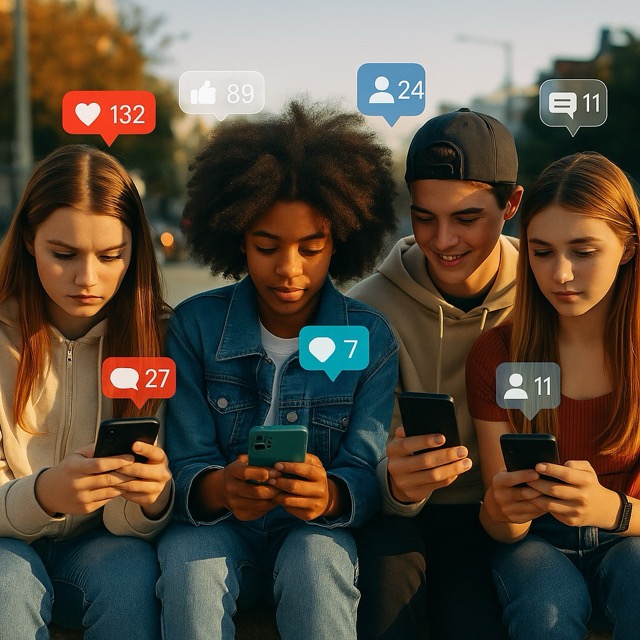
Teenagers in 2025 are the most connected cohort in human history, and they are keenly aware of it. Surveys show that ninety‑five percent of young people aged thirteen to seventeen use at least one social platform, and one third admit they are online almost constantly. In Europe, average daily screen time among fifteen to eighteen year olds now exceeds seven hours and twenty minutes, with TikTok, Snapchat and Instagram dominating their attention.
Life is now organised by push notifications. Usage data indicate that teens spend nearly two hours a day on TikTok, forty‑five minutes on Instagram and barely twenty minutes on Facebook. Many describe school days as little more than waiting to get back online. Almost half tell researchers they spend too much time on social media, a noticeable increase since the beginning of the decade.
Mental health professionals debate whether this pattern represents a crisis or a correlation. The United States Surgeon General warns that social media exposure is a significant driver of youth mental stress, though certainly not the sole cause. Emergency room visits for self‑harm among adolescents are up sharply compared with pre‑pandemic levels, and girls report feeling less confident than boys after time online. On the other hand, supportive online communities help LGBTQ plus youth combat isolation, and many teenagers say internet friendships are as real as those formed face to face.
Identity formation has taken a new turn in the hyper‑social era. Many teenagers curate multiple online selves: a formally presented profile visible to parents and teachers and a secret or limited one for close friends. Polls show that forty percent of sixteen to twenty one year olds run at least one hidden account, while nearly half confess they sometimes wish the internet did not exist at all. The tension between exposure and anonymity fuels both creativity and anxiety.
Social media is also an engine of opportunity. Teenagers learn to code inside Roblox Studio, sell handmade crafts on Etsy, or earn micro payments by writing newsletters. Asked what they value most online, sixty‑three percent cite the ability to learn anything at any time. Educators find that short video lessons can serve as scaffolding for deeper study when paired with traditional coursework.
In response to growing concerns, lawmakers and parents are stepping in. The European Union Digital Services Act now requires platforms to evaluate risks to teenage users, and several United States states have introduced curfews and age verification rules. Parents deploy apps that lock phones after midnight, but many teenagers simply find ways around the restrictions. Technology companies experiment with features such as hidden like counts or reminders to take a break, yet critics say these changes do not alter the underlying business model, which still rewards maximum engagement.
Looking ahead, three trends stand out. First, artificial‑intelligence companions marketed as emotional coaches are spreading through high schools, raising questions about the replacement of human interaction. Second, new wearable devices can measure stress hormones and promise early alerts, but they also collect sensitive data. Third, hybrid socialising is becoming normal.
A single Friday might include a virtual reality concert, a study session on Discord and a real‑world gathering for bubble tea. The story of adolescence in 2025 is not a tale of pure harm or pure benefit. Social media amplifies whatever it touches, from loneliness to solidarity and from vanity to genuine self‑expression. The challenge for adults and platforms alike is to guide that amplification toward growth rather than erosion. As one student told researchers, social media is simply where life happens now; the real question is what kind of life we want it to be.
Sources
Pew Research Center, Teens Social Media and Mental Health, April 2025
United States Surgeon General, Advisory on Social Media and Youth Mental Health, February 2025
OECD, Promoting Good Mental Health in Children and Young Adults, April 2025
British Standards Institution and YouGov survey, May 2025
Common Sense Media and Qustodio, Teen Screen Time 2025 Dashboard, March 2025
Washington Post, Even teens say social media is hurting their mental health, April 2025




 The Tower Post