Formula One’s Attempt to Spice Up the Classic Event Leaves Drivers and Fans Underwhelmed
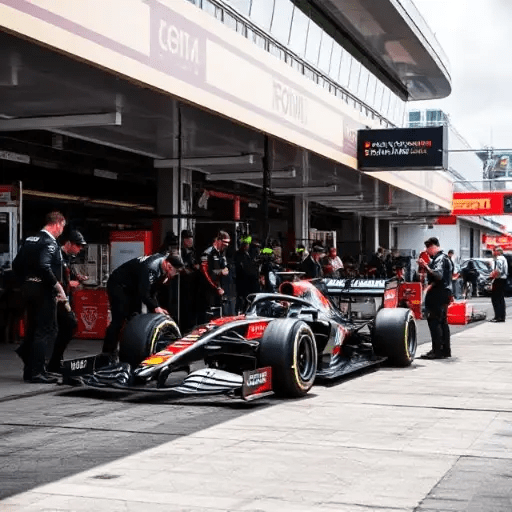
The Monaco Grand Prix, one of the most iconic and prestigious events in the Formula One calendar, has fallen flat in its latest iteration. Max Verstappen and George Russell, two of the sport’s top drivers, have expressed their disappointment and frustration with the decision to impose mandatory pit stops, a move intended to add an element of jeopardy and strategic interest to the 78-lap race through the narrow streets of Monte Carlo.
The two-stop strategy, which required drivers to make at least two pit stops, was designed to create opportunities for overtaking and make the race more exciting for fans. However, it ultimately failed to deliver, leaving drivers and spectators alike underwhelmed.
Verstappen, who was leading the race for the final third before making his final pit stop, compared the experience to playing Mario Kart, a popular racing video game. “You can’t race here anyway, so it doesn’t matter what you do,” he said. “One stop, 10 stops. Even at the end, I was in the lead, but my tyres were completely gone, and you still can’t pass.”
Russell, who qualified out of position due to an electrical problem, was equally unimpressed. He suggested that the entire format of the meeting should be changed to a qualifying weekend, where drivers compete in a single lap to determine the winner. “Qualifying is the most exhilarating moment of the weekend,” he said. “Do we accept that there should be no race and it’s a qualifying race?”
The two-stop strategy failed to address the fundamental problem of modern F1 cars being too big and too heavy to pass one another in Monaco. Despite Verstappen’s lead in the final third of the race, he was unable to overtake his opponents, and Lando Norris claimed the victory after Verstappen made his final pit stop.
The Monaco Grand Prix’s lackluster performance has sparked a wider debate about the future of Formula One. With the sport facing new challenges and pressures, including the rise of social media and the growing influence of technology platforms, it remains to be seen whether the Monaco Grand Prix will adapt and evolve to meet the changing needs of its fans and drivers.
The economic foundations of the news industry have been dismantled by powerful technology platforms, and the Guardian is facing new challenges to its independence and ability to hold power to account. As a reader, you can help protect the Guardian’s future by becoming a regular backer of our work. For just €4 per month, you can support our most crucial and fearless journalism and help us continue to bring you the latest news and analysis from the world of Formula One and beyond.
In the coming weeks, the Guardian will be highlighting the importance of a free and independent press in the face of growing authoritarianism and censorship. As a reader, you can play a crucial role in supporting our work and helping us to continue to hold those in power to account.


 The Tower Post