A Game-Changing Breakthrough in Aerodynamics

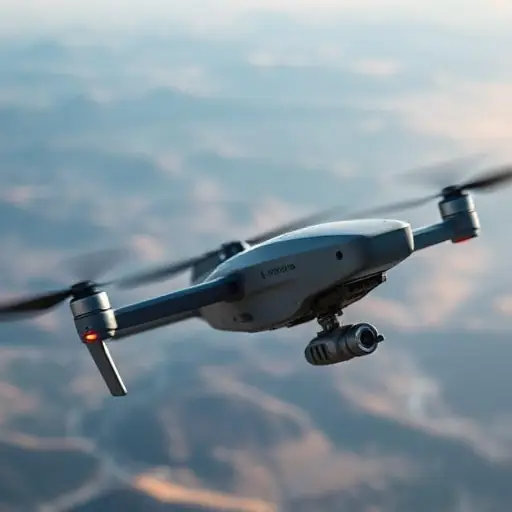
Scientists at the China Aerodynamics Research and Development Centre (CARDC) have made a groundbreaking discovery that could revolutionize the way drones fly. By installing a plasma generator on drone wings, researchers have found a way to improve aerodynamic performance and extend flight times by a staggering 88%.
The technology, which manipulates airflow using electrically charged particles (plasma), enhances lift and reduces drag, allowing drones to maintain stability even at low speeds. This is particularly significant for high-altitude, long-endurance (HALE) drones, which often struggle to generate enough lift to stay aloft.
According to the research team, led by senior scientist Zhang Xin, the plasma generator can fire 16,000 volts to ionize air 8,000 times per second, creating plasma bursts that interact with airflow to prevent separation and improve the lift-to-drag ratio. This breakthrough has the potential to extend the endurance of HALE drones, making them ideal for reconnaissance, disaster response, and military surveillance missions.
The researchers tested the plasma generator in a wind tunnel, where they observed a significant improvement in aerodynamic performance. By creating a controlled environment, the team was able to measure the effects of the plasma generator on airflow and lift. The results were impressive, with the lift-to-drag ratio improving by up to 88% when the plasma generator was activated.
However, the team acknowledges that the technology also comes with a drawback – the creation of plasma vortices, which can cause instability in flight. These vortices are essentially swirls of air that can disrupt the airflow around the drone, making it difficult to control. To address this, researchers are working on a new ‘closed-loop control system’ that would adjust plasma output in real-time based on drone behavior, akin to an autopilot system.
“The plasma generator is a game-changer for HALE drones,” said Zhang Xin. “However, we need to develop a control system that can mitigate the effects of plasma vortices. Our team is working on a closed-loop system that would adjust plasma output to maintain stability and control.”
The implications of this breakthrough are far-reaching, with potential applications not only in drones but also in other aircraft types and space vehicles. The technology could be used to improve the aerodynamic performance of commercial airliners, reducing fuel consumption and emissions. It could also be used to develop more efficient spacecraft, enabling longer-duration missions and greater exploration of space.
Experts believe that this technology could give China an edge in next-gen aircraft and drone design, potentially advancing aerospace innovation. With growing global interest in green aviation and low-energy flight systems, plasma control may soon emerge as a key enabling technology.
“The plasma excitation technology has the potential to revolutionize the way we design and build aircraft,” said Dr. Li Ming, a leading expert in aerodynamics at the University of Shanghai. “It’s a game-changer for the aerospace industry, and we’re excited to see where this technology takes us.”
As the world continues to push the boundaries of flight and exploration, China’s plasma excitation tech is set to play a significant role in shaping the future of aviation. With its potential to improve aerodynamic performance, reduce fuel consumption, and extend flight times, this technology is poised to revolutionize the way we fly.