Was the 24 May 2025 power outage at the Cannes Film Festival merely an infrastructure failure—or part of a hybrid conflict dress rehearsal?
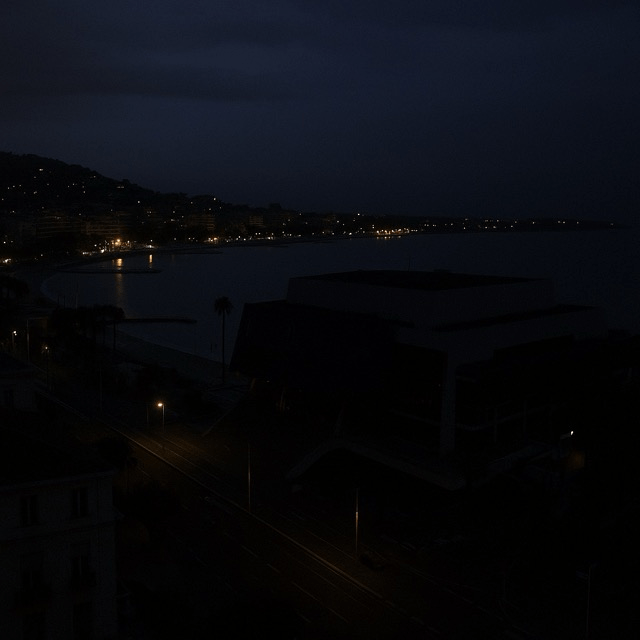
Late morning on 24 May 2025, the red‑carpet glamour of the 78th Cannes Film Festival gave way to an unsettling quiet.
Electricity flickered and died across the city and much of the Alpes‑Maritimes département, plunging cinemas, hotels and 160,000 households into darkness.
Traffic lights froze, screenings stopped mid‑reel, and the festival’s vaunted closing ceremony hung in the balance.
Although emergency generators eventually restored power to the Palais des Festivals, the interruption lasted long enough to sow confusion, snarl traffic and send social‑media speculation into overdrive.
French grid operator Enedis confirmed that the outage began just after 10:00 a.m. local time and that preliminary evidence pointed to “deliberate human action” at a regional substation.
Police have opened an arson investigation.
At first glance, the outage might resemble the sort of technical mishap that occasionally bedevils ageing infrastructure.
Yet its timing and target—one of the world’s most media‑saturated cultural gatherings, broadcast live to hundreds of millions—invite another interpretation: was this a small‑scale, low‑risk rehearsal for hybrid warfare?
What makes an incident ‘hybrid’?
Since Russia’s annexation of Crimea in 2014, NATO and EU strategists have used the label *hybrid warfare* to describe campaigns that combine conventional military force with cyber‑attacks, sabotage, disinformation, economic coercion and the exploitation of civil unrest.
The UK Defence Concept and Doctrine Centre defines it as “an array of new, cost‑effective means … ranging from information operations in cyberspace to the proliferation of cheap missile technology” deployed in concert to create confusion and stretch a defender’s decision cycle.
Significantly, hybrid operations rarely cross NATO’s Article 5 red line.
Their power lies in plausible deniability: by the time policymakers agree whether an incident is hostile action or mere accident, the perpetrator has already shaped public perception and tested critical systems.
A pattern of probes
Europe’s power grids have become a favoured target for such probes.
Ukraine endured rolling blackouts after sophisticated malware attacks in 2015 and 2016.
In October 2022 fibre‑optic cables that carry signalling data for German railways were cut simultaneously at two remote junctions, halting hundreds of trains.
Closer to Cannes, French authorities recorded a 35 percent rise in deliberate damage to electrical infrastructure in 2024, a trend intelligence officials link to both eco‑extremist cells and foreign intelligence services.
Each incident is brief and geographically limited, but together they map vulnerabilities and test crisis‑response protocols.
Why Cannes?
Targeting a globally televised event multiplies psychological impact at minimal cost.
The festival concentrates journalists, investors and celebrities—soft‑power assets prized by every modern state.
Disrupting its closing ceremony risks no lives yet guarantees headlines and social‑media amplification.
In the information domain, even a two‑hour blackout can be spun into narratives of Western decadence and incompetence, or (conversely) of overblown security hysteria.
Arson or adversary?
Investigators have not ruled out a domestic motive.
France has faced a wave of pension‑reform protests and occasional sabotage by radical climate activists.
But senior officials note that breaking into a high‑voltage switching station requires inside knowledge and specialised tools.
Moreover, regional surveillance cameras suffered simultaneous outages minutes before the grid failure—an indicator that the perpetrators understood how to blind detection systems.
No group has claimed responsibility, suggesting either a covert foreign actor or professionals whose objective was reconnaissance rather than publicity.
Stress‑testing resilience
From a defence standpoint, the incident is instructive.
Festival organisers restored essential functions within 40 minutes thanks to redundant power supplies, while French broadcasters switched to satellite uplinks.
These actions limited economic losses and prevented the narrative coup an extended blackout might have delivered.
Still, telecom operators reported sporadic 4G disruptions, and rail services between Cannes and Nice were suspended for three hours, stranding thousands of tourists.
Had the outage lasted into the evening gala, the reputational damage—and insurance claims—would have been severe.
The bigger picture
Hybrid campaigns seek precisely this kind of incremental destabilisation.
They probe how quickly emergency services respond, whether command structures communicate clearly, and how the public reacts online.
In February 2025, EU Commissioner for Home Affairs Ylva Johansson warned that “critical‑infrastructure attacks designed to look like accidents are increasing in both frequency and sophistication.”
The Cannes blackout, whether ultimately blamed on an arsonist or a foreign proxy, fits that warning like a glove.
Where do we go from here?
Paris has already instructed the Office de Sûreté Nucléaire to audit physical security at substations nationwide and to accelerate deployment of AI‑assisted intrusion sensors.
At the EU level, the new Critical Entities Resilience Directive, due to enter force in January 2026, will mandate cross‑border ‘black‑sky’ exercises that simulate simultaneous failures of power, telecoms and finance networks.
Yet resilience is not purely technical.
Communication strategies that counter disinformation in real time—and platforms that verify official updates—are essential to preventing panic and restoring trust when the lights go out.
Conclusion
Conclusive attribution for the Cannes blackout may never reach the public domain; intelligence services often keep such findings classified.
Even so, the event underscores a discomforting truth: in the grey zone between peace and declared war, adversaries can weaponise the mundane act of flipping a switch.
For policymakers, the lesson is clear.
Protecting critical infrastructure now includes securing the narrative space that surrounds it.
Fail to do so, and the next rehearsal may look less like a power glitch and more like an opening salvo.
**Sources**
France 24, “Cannes hit by power outage on final day of film festival,” 24 May 2025.
Associated Press, “Power outage disrupts final day of Cannes Film Festival, police investigate possible arson,” 24 May 2025.
Economic Times, “What caused the blackout on the final day of Cannes Film Festival?” 24 May 2025.
UK Development, Concepts and Doctrine Centre, Countering Hybrid Warfare: Conceptual Foundations and Implications for Defence Forces, March 2019.



 The Tower Post