Beijing Seeks to Reshape Global Academia by Courting America’s Brightest Minds
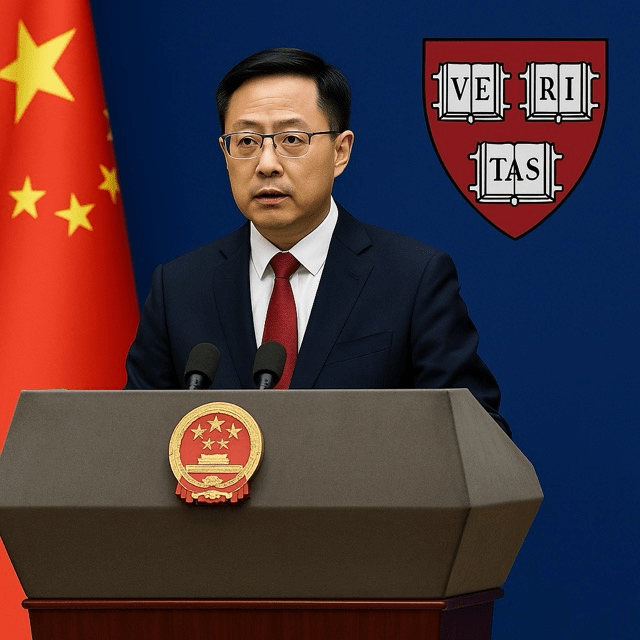
In a bold and unprecedented move, China has publicly extended an invitation to students from Harvard University and other elite U.S. institutions to study in its top universities. The announcement, made by China’s Ministry of Education, is seen as part of a larger strategy to position China as a global hub for higher education and academic innovation.
The invitation comes amid rising geopolitical tensions between Washington and Beijing, particularly in the fields of technology, trade, and ideological influence. China’s outreach to American students is widely interpreted as a direct challenge to the dominance of U.S. universities in global academia, and a sign of growing confidence in China’s own educational infrastructure.
During a press conference held in Beijing, officials highlighted the country’s recent investments in research institutions, scholarships for international students, and its expanding network of English-taught programs. “We welcome talented young minds from around the world, including from Harvard, to come learn, exchange, and innovate in China,” said one senior education official.
While China has hosted international students for decades, this targeted effort to attract top-tier American talent is a new development. Analysts suggest it reflects both a desire to showcase China’s global openness and a subtle response to the perception that the U.S. is becoming more inward-looking, particularly following visa restrictions and political rhetoric during recent administrations.
Harvard University, though not directly responding to the invitation, has acknowledged the announcement, emphasizing the importance of academic exchange and collaboration across national borders. Meanwhile, some Harvard students expressed curiosity about studying in China, intrigued by the opportunity to engage with a rapidly evolving society and economy.
Critics, however, have raised concerns about academic freedom and censorship in Chinese institutions. Human rights organizations have warned that international students may face limitations in classroom discussions or encounter surveillance. Beijing counters that its universities promote “constructive academic dialogue” and are aligned with global standards of education.
This latest development adds a new layer to the ongoing U.S.-China rivalry. The battle for influence is no longer confined to military or economic power—it now extends deeply into the intellectual and cultural arenas. By courting American students, China signals its ambition to redefine global leadership not just through innovation and commerce, but through education.
Whether this initiative succeeds in reshaping student flows and perceptions of China’s universities remains to be seen. But it is clear that Beijing is determined to challenge the U.S. not only in trade and politics but also in the hearts and minds of the world’s future leaders.




 The Tower Post