Putin’s Legal Fears Shape the Kremlin’s Reluctance to Engage on Neutral Grounds
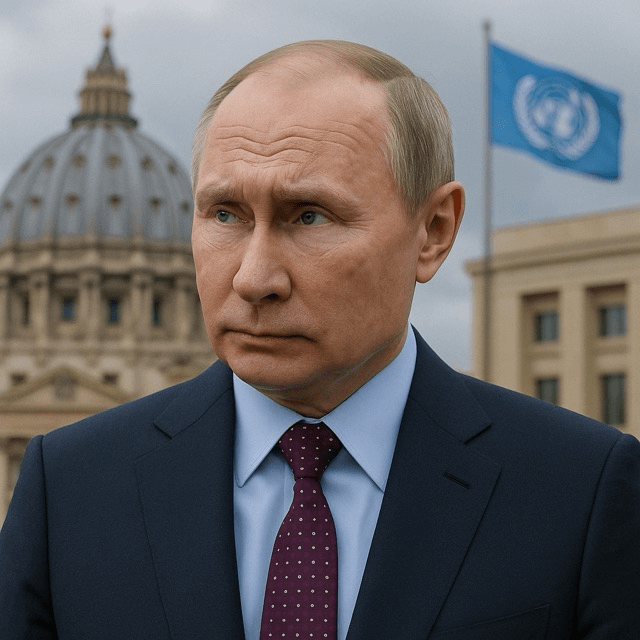
The ongoing war in Ukraine, now stretching into its third year, has prompted countless calls for negotiation and peace. International mediators, including the Vatican and Switzerland, have offered their neutral grounds to facilitate peace talks between Russia and Ukraine. However, Russia has firmly rejected both offers, citing security concerns and lack of neutrality. But behind these diplomatic refusals lies a more troubling reality: President Vladimir Putin’s fear of arrest.
The International Criminal Court (ICC) issued an arrest warrant for Putin in March 2023 over alleged war crimes involving the deportation of Ukrainian children to Russia. While Russia denies the legitimacy of the ICC, the warrant has had practical consequences. Countries that are signatories to the Rome Statute, including Switzerland and the Vatican (which cooperates closely with the ICC), would be obligated to arrest Putin if he entered their territories.
This legal risk has become a major obstacle in organizing any meaningful diplomatic talks in neutral settings. The Kremlin has instead proposed negotiations in countries such as Turkey, China, or the United Arab Emirates—nations less likely to act on the ICC warrant and more aligned with Russian geopolitical interests.
Analysts suggest that Russia’s rejection of Geneva and the Vatican is not solely a matter of diplomatic preference, but of personal security. Hosting negotiations in a country with legal obligations to the ICC places Putin at significant personal risk. As a result, this has limited the pool of acceptable mediators and venues, stalling efforts to end the conflict.
Critics argue that this situation highlights the broader problem of holding powerful leaders accountable while also striving for peace. The arrest warrant, while symbolically powerful, complicates the realpolitik of war resolution. On one hand, justice demands accountability; on the other, diplomacy requires engagement—even with the accused.
This stalemate has led many to fear that the war in Ukraine may drag on indefinitely. Without safe and acceptable negotiation grounds, the chances of a ceasefire or a political resolution remain slim. The international community is thus faced with a difficult balancing act: how to pursue justice without completely foreclosing the possibility of dialogue.
In conclusion, Russia’s refusal to negotiate in Vatican City or Geneva is not merely a diplomatic decision—it is a reflection of the deep legal and political entanglements surrounding Vladimir Putin. As long as his personal liberty is at stake, meaningful peace negotiations in Western-aligned venues may remain out of reach.
 The Tower Post