Strategic Minerals, Global Competition, and the Urgent Need for Western Investment in the Arctic Frontier
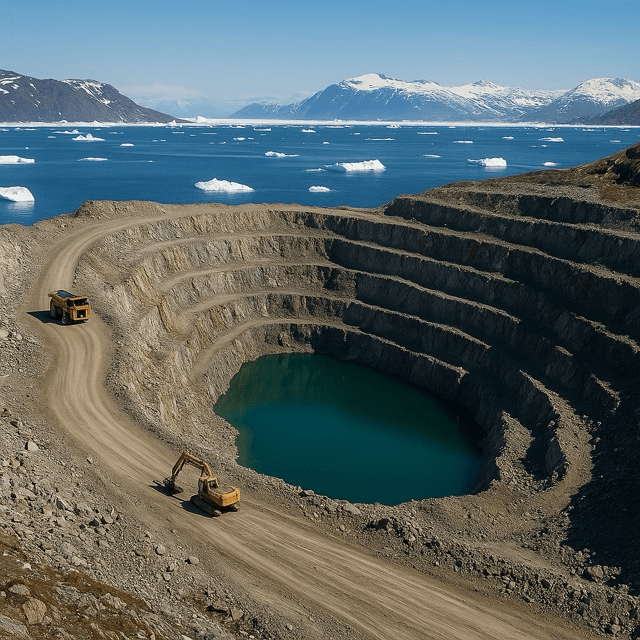
As the world accelerates its transition to clean energy and advanced technologies, the demand for critical minerals has surged. Rare earth elements, lithium, cobalt, and other strategic resources are now as vital as oil once was. In this global race, Greenland has emerged as a geological treasure trove—an untapped Arctic frontier with immense economic and strategic potential. Yet, while Chinese and Russian interests are actively exploring the island’s resources, the US and EU risk falling behind unless they act swiftly.
Greenland’s vast and largely unexplored territory is rich in minerals crucial for renewable energy infrastructure, electric vehicles, semiconductors, and military technology. However, Western mining companies have been slow to invest, hampered by regulatory hesitations, logistical challenges, and environmental sensitivities. Meanwhile, China has already made substantial moves, financing feasibility studies and attempting to secure mining rights.
The urgency for Western engagement is not only economic but geopolitical. As tensions rise between democratic nations and authoritarian powers, control over critical supply chains becomes a matter of national security. If the US and EU allow rivals to dominate Greenland’s resources, they risk strategic dependency in the decades to come.
The Greenlandic government has signaled openness to foreign investment, particularly from partners that respect environmental standards and indigenous rights. This presents a golden opportunity for American and European firms to enter responsibly, building trust while developing sustainable mining operations. Recent political shifts in Nuuk also suggest a growing interest in diversifying the island’s economic base beyond fishing and Danish subsidies.
Furthermore, Greenland’s location offers logistical advantages, including proximity to North America and Europe, as well as access to emerging Arctic shipping routes. With the right infrastructure investments and partnerships, it could become a cornerstone of a secure, ethical mineral supply chain for the West.
The European Union has already named Greenland a strategic partner for raw materials, and the US Department of Defense has flagged the island as a priority for supply diversification. Yet, these declarations need to be followed by concrete action—capital investment, infrastructure development, and diplomatic support.
Failure to act would not only be a missed economic opportunity but a strategic blunder. Greenland is no longer a remote curiosity—it is a frontline in the battle for resources, security, and sovereignty. Western mining companies and governments must move quickly, responsibly, and collaboratively to secure their place in the Arctic’s future.
The clock is ticking, and the ice is melting. Now is the time to invest in Greenland.
 The Tower Post