Comparing Power, Politics, and Personalities in the 21st Century
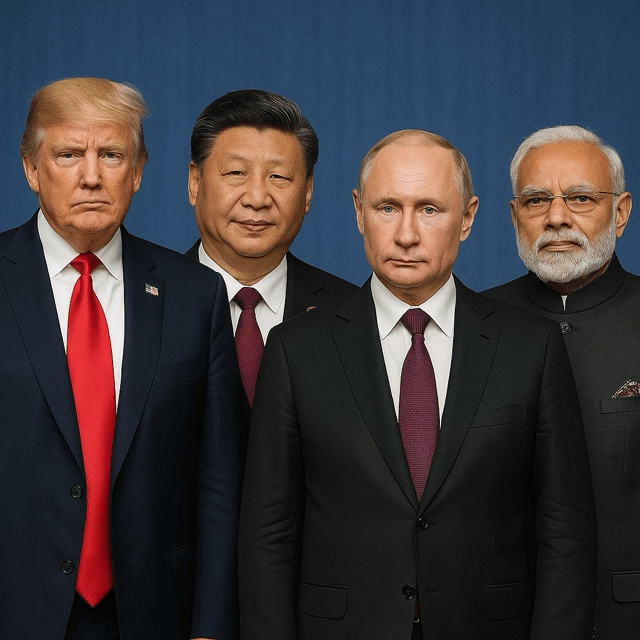
In a world increasingly shaped by strong personalities and shifting power dynamics, four leaders stand out for their outsized influence on the global stage: Donald Trump, Xi Jinping, Vladimir Putin, and Narendra Modi. Each of these men has carved a distinct leadership style rooted in their national context, personal histories, and geopolitical ambitions. Analyzing them in contrast reveals much about the present and future trajectory of global politics.
Donald Trump: The Disruptor
Donald Trump, the former and potentially future President of the United States, brought an unconventional, confrontational style to the White House. Marked by his “America First” policy, Trump disrupted international alliances, questioned multilateral institutions, and pursued a transactional approach to diplomacy. His populist rhetoric and media-savvy persona redefined political communication, leveraging social media to bypass traditional channels and speak directly to supporters. Trump’s influence persists, shaping the Republican Party and American foreign policy debates, even after his presidency.
Xi Jinping: The Consolidator
Xi Jinping, President of the People’s Republic of China, represents a return to centralized, top-down rule not seen since Mao Zedong. Under his leadership, the Chinese Communist Party has tightened control over civil society, expanded its global footprint through the Belt and Road Initiative, and positioned China as a systemic rival to the West. Xi’s governance model blends authoritarianism with strategic economic ambition, aimed at reshaping the global order in China’s image. His indefinite rule marks a significant break from China’s previous leadership norms.
Vladimir Putin: The Strategist
Vladimir Putin has dominated Russian politics for over two decades with a blend of nationalism, control of media, and military assertiveness. His actions in Crimea, Syria, and most significantly, Ukraine, underscore a vision of restoring Russian influence and countering Western expansion. Putin’s leadership is characterized by a calculated use of power, manipulation of democratic processes, and an appeal to traditional Russian values. Despite international sanctions and domestic challenges, his hold on power remains firm, supported by a mix of repression and patriotic appeal.
Narendra Modi: The Nationalist Modernizer
India’s Prime Minister Narendra Modi combines populist charisma with a vision of national rejuvenation rooted in Hindu nationalism. Domestically, he has pursued economic reforms, digitalization, and infrastructure expansion, while internationally projecting India as a rising power. Modi’s leadership is marked by direct engagement with the public through mass rallies and digital platforms, and by his ability to blend tradition with modernization. He is both admired and criticized for his approach to religious and cultural minorities, making him a deeply polarizing yet dominant figure in Indian politics.
Conclusion: A New Era of Leadership
Together, these leaders illustrate the diverse paths of contemporary global leadership. While Trump and Modi appeal to democratic populism, Xi and Putin exemplify centralized authoritarianism. What unites them is a personalization of power, strategic nationalism, and a departure from traditional diplomatic norms. As the world navigates complex challenges—climate change, economic instability, geopolitical realignments—the leadership of these four men will continue to shape not only their own nations but the entire international landscape.
 The Tower Post