Evolving Strategies in a Multipolar and Technologically Complex World
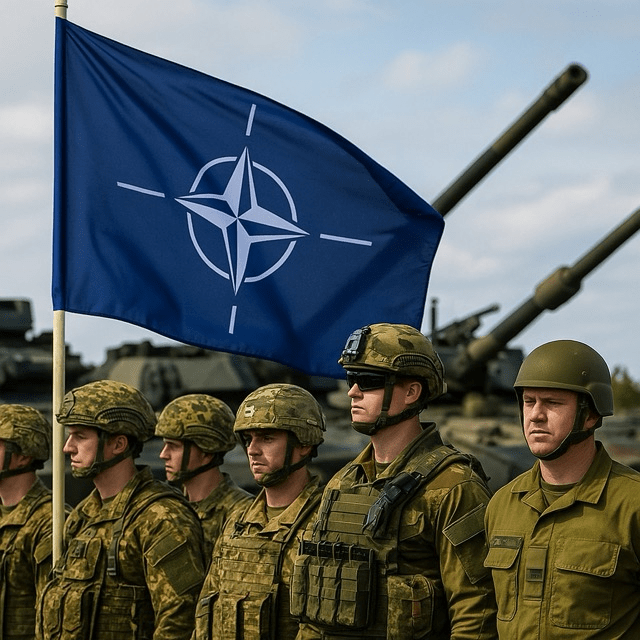
In an era marked by geopolitical volatility, technological advancement, and the resurgence of great power competition, NATO’s role as a guarantor of collective defense has acquired renewed urgency. The alliance, founded in 1949, was originally conceived as a deterrent against Soviet aggression. Today, its mission remains deterrence — but the nature, scope, and tools of deterrence have evolved dramatically.
### A New Strategic Context
Russia’s invasion of Ukraine in 2022 reawakened Europe to the threat of state-on-state warfare. NATO’s eastern flank has since become a fortified line, with increased troop deployments, rotational forces, and joint exercises involving thousands of soldiers. At the same time, the alliance faces the rising influence of China, particularly in the realms of cyber, space, and emerging technologies.
The strategic competition is no longer confined to the physical battlefield. Cyberattacks on critical infrastructure, disinformation campaigns, and economic coercion have become part of the modern playbook of aggression. NATO’s Strategic Concept of 2022 explicitly acknowledges these multidimensional threats, underscoring the alliance’s commitment to both conventional and hybrid defense.
### Technological Edge and Innovation
To maintain its deterrence credibility, NATO is investing heavily in advanced technologies — including artificial intelligence (AI), quantum computing, and autonomous systems. These tools are being integrated into military planning, surveillance, and decision-making processes, aimed at giving member states a decisive advantage in both high-intensity conflict and gray zone scenarios.
NATO’s Defence Innovation Accelerator for the North Atlantic (DIANA) and the NATO Innovation Fund are central to these efforts, promoting collaboration between the public and private sectors to accelerate the deployment of dual-use technologies.
### Forward Defense and Collective Security
One of the most significant shifts in NATO’s deterrence doctrine is the emphasis on “forward defense” — the idea that deterrence is most effective when threats are met not only with the promise of retaliation but also with proactive posturing. This includes the pre-positioning of equipment, rapid deployment forces, and the readiness to respond to crises beyond NATO’s traditional geographical bounds.
Furthermore, the enlargement of NATO — with Finland and potentially Sweden joining — adds strategic depth and reinforces deterrence by denying adversaries the ability to isolate any member state.
### Conclusion: Unity and Adaptation
The future of NATO deterrence lies in unity, adaptability, and innovation. As threats become more complex and diffuse, deterrence must be multidimensional — encompassing military strength, technological superiority, political cohesion, and societal resilience. In this evolving landscape, NATO’s ability to adapt while remaining anchored in its foundational principles will determine its relevance and effectiveness in the decades to come.




 The Tower Post