A Game of Power and Symbolism
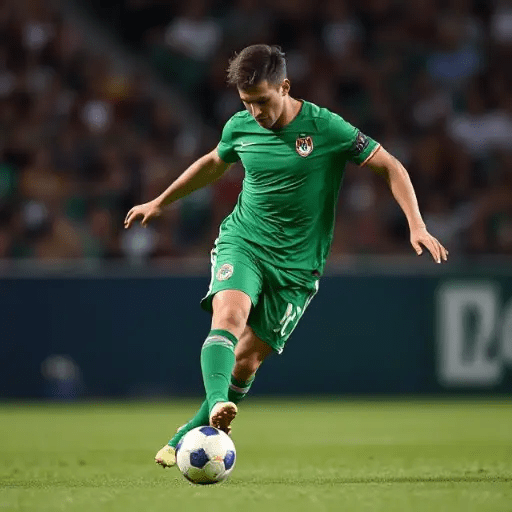
In the world of Hungarian football, the lines between sport and politics are increasingly blurred. The country’s two state-backed clubs, Ferencvaros and Puskas Akademia, have become pawns in a larger game of power and symbolism. While Ferencvaros, led by Robbie Keane, has dominated the league for the past decade, Puskas Akademia, backed by Prime Minister Viktor Orban, is rising to challenge its rival’s supremacy.
Ferencvaros, the traditional powerhouse of Hungarian football, has been the beneficiary of significant state funding, which has enabled it to become a force to be reckoned with in Europe. The club’s success has been a key part of the government’s strategy to promote Hungarian football and boost national pride. However, critics argue that this success comes at a cost, as the club’s independence and sporting integrity are compromised by its close ties to the state.
Puskas Akademia, on the other hand, is a more recent creation, established in 2007 as a passion project of Prime Minister Orban. The club has received staggering amounts of state funding, with a combined budget of around €370m between 2010 and 2024. This has enabled it to invest heavily in its youth academy and build a strong team that is now challenging Ferencvaros for the league title.
The rise of Puskas Akademia is seen by many as a reflection of Orban’s consolidation of power in Hungary. The club’s rapid ascent through the divisions and its increasing success in European competitions are seen as a physical manifestation of the prime minister’s leadership and a tool for promoting his ideology.
While Ferencvaros is often seen as the people’s club, made powerful by politics, Puskas Akademia is a more overtly political entity, designed to serve as a physical and ideological extension of Orbanism. The club has no culture, no history, and no fanbase, but it has power, and in Hungary, power is often enough.
The question is, what does success mean in this climate? What does it mean for the league? While there is personal glory involved, the real story of Hungarian football under Orban lies beyond the silverware. The two state-backed clubs are no longer just teams – they are vehicles for tradition, messaging, and legacy.
In this landscape, function is often secondary to symbolism. Stadiums, school curriculums, news channels, and football clubs – each forms part of a broader architecture of control, built to anchor loyalty and cultivate a shared national narrative from the top down.
The influence of politics on Hungarian football is not a new phenomenon. However, under Orban’s leadership, the relationship between the government and the sport has become increasingly complex. The prime minister’s passion for football has led to a significant increase in state funding for the sport, but this has also created a culture of dependency and corruption.
Critics argue that the state’s interference in the sport has led to a lack of transparency and accountability, as well as a suppression of dissenting voices. The government’s control over the sport has also led to a homogenization of the game, with clubs and players forced to conform to the government’s ideology.
The future of Hungarian football is uncertain, and the relationship between the government and the sport is likely to remain complex. However, one thing is clear – the politics of football in Hungary will continue to shape the country’s sport for years to come.
As Robbie Keane’s words from Saturday night suggest, football is often about more than just the game itself. It is about community, identity, and belonging. But in Hungary, football has become a tool for the government to promote its ideology and consolidate power.
The question is, can Hungarian football ever be separated from the system that now so thoroughly envelops it? Or will the politics of football continue to shape the country’s sport for generations to come?
 The Tower Post