What the CEO’s testimony means for Italy, Egypt, and the long quest for justice
Introduction
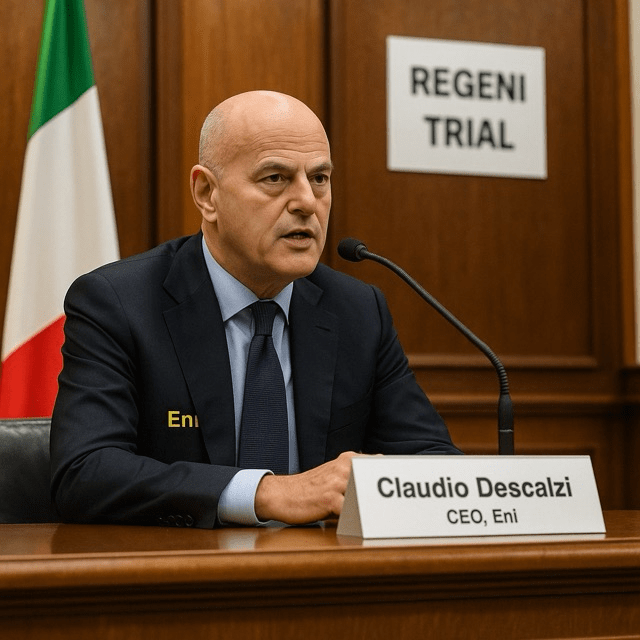
On 27 May 2025, Rome’s Court of Assizes heard a voice few expected in the seven‑year battle to uncover the truth behind Giulio Regeni’s torture and murder. Claudio Descalzi, chief executive of Italian energy giant ENI, appeared as a witness in the in‑absentia trial of four senior Egyptian security officers. Descalzi told judges the killing remained “an atrocious mystery,” adding that none of his meetings with Egyptian officials had produced credible answers. His appearance underscores the tangled nexus of commerce, diplomacy and human rights that has long clouded Italian‑Egyptian relations.
1. Why Descalzi Matters
ENI is not a bystander in Cairo. Since 2015 the state‑controlled multinational has poured billions of euros into Egypt’s Zohr gas field and other upstream assets, meeting more than a quarter of the country’s domestic demand and shipping liquefied natural gas to Europe. Descalzi’s frequent visits have given him direct access to President Abdel Fattah al‑Sisi and senior intelligence officials—precisely the circle prosecutors accuse of shielding Regeni’s killers. Bringing the CEO to court was therefore less about corporate ethics than about prising open an information channel that may have bypassed traditional diplomacy.
2. Inside the Courtroom: What Was Asked—and Not Asked
Under questioning by state prosecutor Sergio Colaiocco, Descalzi confirmed multiple meetings with Sisi in 2016 and 2017 but said the Regeni case was raised only “in general terms.” He denied ever receiving privileged briefings from Egypt’s General Intelligence Service. Defence lawyers—appointed by the court to represent the absent Egyptian defendants—argued that ENI’s extensive security due diligence in Egypt should have alerted the firm to potential risks faced by foreigners. Descalzi insisted ENI had “no operational role” in police matters and reiterated the company’s support for the Regeni family. Notably, the bench declined to press him on whether energy deals had been used by Rome as leverage for cooperation—a line of inquiry still shielded by diplomatic secrecy.
3. The Economics Behind the Ethics
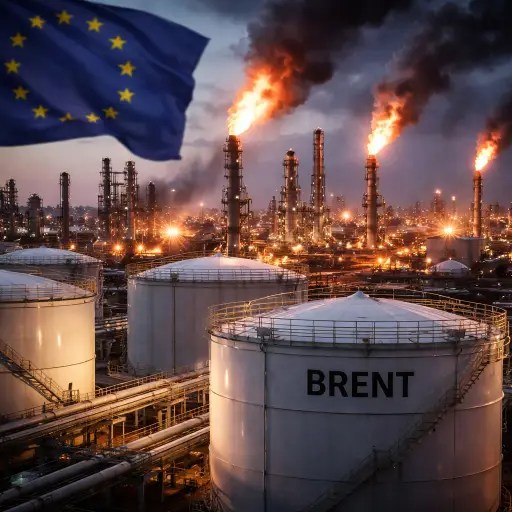
Italy exported €3.4 billion worth of goods to Egypt last year and imported record volumes of LNG. ENI’s Egyptian portfolio accounted for roughly 15 percent of its global production in 2024, according to company filings. Those numbers give Cairo leverage—but they also give Rome stakes it cannot ignore. Analysts note that Descalzi’s testimony lands just as the EU scrambles for non‑Russian gas and as ENI negotiates fresh concessions in Egypt’s Western Desert. Any public friction over Regeni risks disrupting a supply line integral to Europe’s energy‑security calculus.
4. Business Versus Human Rights
For human‑rights advocates, Descalzi’s appearance is a litmus test. Amnesty International welcomed the summons but warned that without tangible cooperation from Cairo—none of the accused officers has appeared—corporate testimony risks becoming window dressing. The CEO’s statements highlight the wider dilemma facing Western multinationals operating in authoritarian states: can profit coexist with accountability? Even as ENI champions ESG metrics, the company’s Egyptian footprint shows the limits of voluntary standards when local rule‑of‑law collapses.
5. Legal Significance and Next Steps
The Regeni trial is unprecedented: Italy is prosecuting foreign security officials for crimes committed abroad against an Italian citizen. Under Italian law, testimony from high‑profile witnesses can buttress circumstantial evidence about chain‑of‑command responsibility. Prosecutors aim to link orders from Cairo to the officers who allegedly abducted Regeni on 25 January 2016. Descalzi’s remarks about conversations—however vague—provide context for that command structure. The court is expected to hear further testimony from former prime ministers Matteo Renzi and Paolo Gentiloni in coming months.
Conclusion
Claudio Descalzi’s day in court will not by itself solve the Regeni mystery, but it strips away the pretence that business can stay neutral when human rights collide with national interest. As the trial grinds on, Italy must navigate a triangular tightrope: demanding justice, safeguarding energy security, and preserving diplomatic channels. Whether Rome can balance those imperatives—or whether the pursuit of truth finally tips the scales—will help define the legacy of Giulio Regeni’s case and the moral credibility of Europe’s largest energy player.

 The Tower Post