Spanish Grand Prix: A Weekend of Uncertainty as Front-Wing Flexibility Takes Center Stage
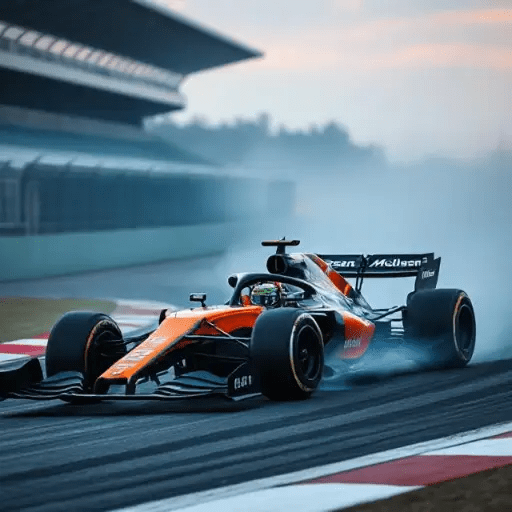
McLaren’s Oscar Piastri topped the Friday practice session at the Spanish Grand Prix, edging out George Russell of Mercedes by a mere 0.286 seconds. Piastri’s teammate, Lando Norris, took third place, with Red Bull’s Max Verstappen and Norris clocking the same lap time just 0.024 seconds behind. Ferrari’s Charles Leclerc rounded out the top five, with Lewis Hamilton’s Mercedes struggling to find pace, complaining over the radio that his car was “undriveable.”
The introduction of a new rule change aimed at reducing front-wing flexibility has raised questions about its impact on the weekend’s racing. Red Bull and Ferrari are hopeful that the tougher restrictions will give them a competitive edge, while McLaren believes it will have little effect on their performance. The rule change is designed to prevent teams from using front-wing flexibility to control aerodynamic performance, but it remains to be seen whether it will have any significant impact on the racing.
Red Bull, in particular, has been a major proponent of the front-wing flexibility test, and their efforts to persuade the FIA to introduce the test have paid off. With Verstappen at the wheel, Red Bull has been a strong contender all season, and the Dutchman’s pace-setting lap in Barcelona has given the team hope that they can challenge McLaren for the top spot. Verstappen’s teammate, Sergio Pérez, has also been impressive, and the two drivers have been working closely together to fine-tune their car.
Verstappen’s performance in Barcelona has been particularly noteworthy, as he and Norris set the pace on the medium-compound tyres. The Dutchman’s narrow advantage over Norris suggests that the two drivers are evenly matched, and it will be interesting to see how they compare in the qualifying session and the race itself. Red Bull’s strategy of using the front-wing flexibility test to boost speed on the straights while retaining downforce in the corners has been a key factor in their success, and it will be fascinating to see how they adapt to the new rule change.
The weather in Barcelona is expected to be hot, with temperatures reaching around 30C, which could play a role in managing rear-tyre temperatures over a race stint. McLaren has been particularly effective in this area, and it could become a crucial factor in the race. As the weekend progresses, teams will be closely matched, with McLaren and Red Bull looking particularly evenly matched.
The front-wing flexibility test is a complex issue, with teams having used this technique to boost speed on the straights while retaining downforce in the corners. However, the current generation of cars has made this phenomenon useful in tuning the cars between high- and low-speed cornering performance. By making the front wings become less effective at higher speeds, teams can reduce the nervousness in quick corners without making the cars too hard to drive at low speed.
The Spanish Grand Prix is shaping up to be a weekend of uncertainty, with several factors at play that could influence the outcome of the race. The introduction of the new rule change, the hot weather, and the closely matched teams all contribute to a complex and unpredictable racing scenario. As the weekend unfolds, one thing is certain: only the best teams will be able to adapt and come out on top.




 The Tower Post