The tech mogul’s deficit alarm splits Republicans and rattles markets ahead of a cliff‑edge Senate vote
Introduction
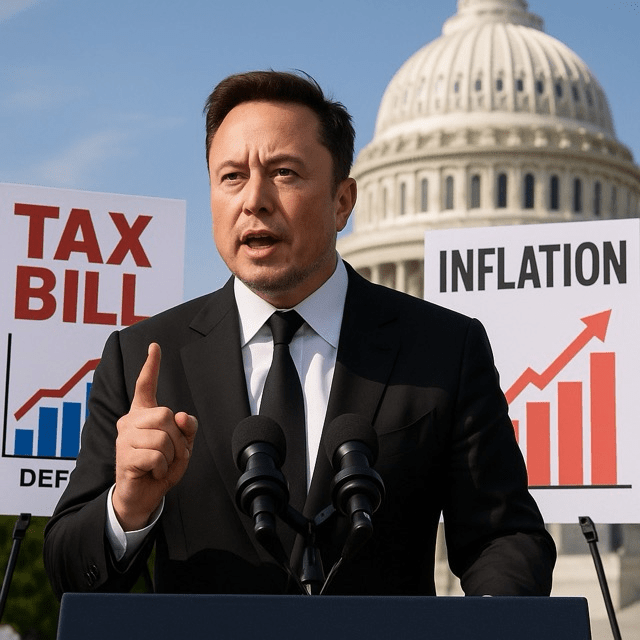
When Elon Musk called Donald Trump’s “One Big Beautiful Bill Act” a “budget time‑bomb” during a late‑night Spaces session on X, it was more than a billionaire’s rant. It was a thunderclap that reverberated through Washington’s echoing marble rotundas. Republicans had touted the sweeping tax package as the centre‑piece of their economic agenda. But Musk—once hailed by Trump as the ‘Thomas Edison of our time’—warned that the bill’s temporary payroll‑tax holiday and permanent corporate‑rate cuts could add more than $3 trillion to the national debt by 2035. The outburst came just days before a razor‑thin Senate vote, injecting fresh volatility into a debate already fraught with ideological fault lines.
1. What’s in the Bill
Dubbed the “One Big Beautiful Bill Act,” the legislation slashes the headline corporate tax rate from 21 to 17 percent, offers a two‑year payroll‑tax holiday for workers earning up to $140,000, and layers on R&D super‑deductions aimed at on‑shoring semiconductor supply chains. To offset only part of the revenue loss, it sunsets child‑tax‑credit expansions and postpones infrastructure outlays to the next budget window—accounting moves that critics call gimmicks.
2. Musk’s Numbers—and Why They Matter
Musk underpinned his critique with a 12‑page spreadsheet posted to X. In it, he projects:
• A $650 billion deficit spike in FY 2026.
• A cumulative $3.3 trillion debt increase by 2035.
• A 40‑basis‑point rise in 10‑year Treasury yields within two years.
He argues that higher borrowing costs will crowd out private investment—ironically hurting the very innovation the bill claims to nurture. Musk’s numbers broadly align with an early Congressional Budget Office score, lending his critique bipartisan credibility.
3. GOP Splits and Strange Bedfellows
Musk’s salvo widened cracks within the GOP caucus. The House Freedom Caucus demanded deeper spending cuts, while centrist Senators Susan Collins and Lisa Murkowski said the bill needs “realistic pay‑fors.” Across the aisle, progressive Democrats gleefully cited Musk’s deficit math to paint the package as a giveaway to the wealthy. The unlikely coalition sent Senate Majority Leader Mitch McConnell back to the drawing board to re‑run procedural vote counts.
4. Market Reaction
Wall Street reacted with a collective shrug—until it didn’t. Treasury yields ticked up eight basis points after Musk’s Spaces call, hinting at renewed deficit worries. JP Morgan analysts warned that if the bill passes intact, annual net Treasury issuance could breach $2 trillion by 2030, placing upward pressure on the dollar and complicating overseas revenues for exporters like Tesla.
5. White House Counter‑Attack
The Trump administration hit back swiftly. Press Secretary Karoline Leavitt accused Musk of “tech‑bro alarmism” and unveiled dynamic‑scoring estimates showing $1 trillion in growth‑driven revenue gains over a decade. Treasury Secretary Chris Campbell argued that a permanent corporate‑tax cut is “self‑financing” when paired with repatriation incentives, dismissing Musk’s analysis as “static accounting.” Still, aides privately conceded the billionaire’s stamp of disapproval complicates the bill’s optics.
6. Musk’s Political Calculus
Musk’s intervention underscores his evolution from policy adviser to unpredictable power broker. After donating an estimated $300 million to GOP super‑PACs in 2024, he has hinted he may “sit out” the 2026 mid‑term cycle if Republicans abandon fiscal restraint. Insiders say he is also frustrated by Pentagon delays in approving Starlink military contracts and by fresh antitrust murmurs over X. Whether political or personal, his critique has drawn outsized attention precisely because it pierces the GOP’s traditional tax‑cut consensus.
7. Possible Off‑Ramps
Senate negotiators now float a smaller, phased‑in corporate‑rate cut and claw‑back provisions if deficit targets are missed. Another option: extend expiring R&D credits but scrap the payroll‑tax holiday. Musk signalled openness to a “targeted” bill, calling it “better than driving a Model S through the debt ceiling.” Yet time is tight: leadership wants a vote before the July recess.
Conclusion
Whether Musk’s critique torpedoes or merely dents the showpiece tax bill, it has already reshaped the narrative. By framing the debate around debt rather than growth, the world’s richest entrepreneur has forced lawmakers to reconcile tax relief with fiscal reality. As one Senate aide put it, “Musk just reminded everyone that numbers—not slogans—have gravity.” In Washington’s unfolding tax drama, gravity may yet prove the strongest force.




 The Tower Post