by [Internal Source to Venezuela Minister of Foreign Affairs]
THE FACTS
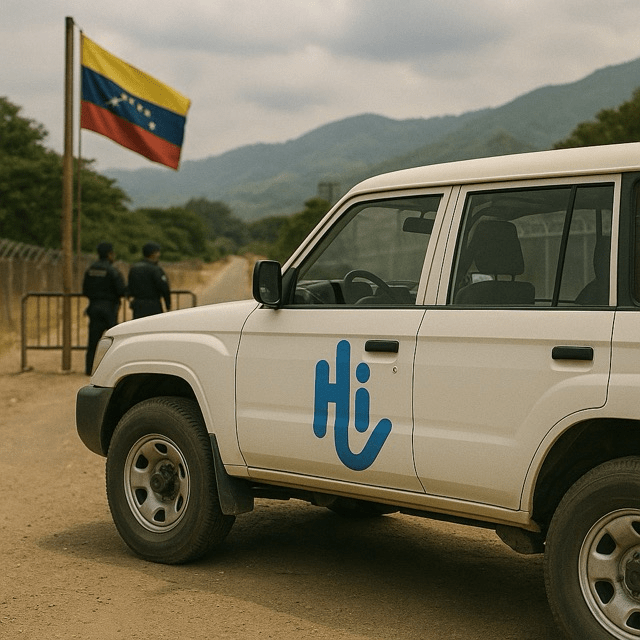
Alberto Trentini, 45, a field worker with the NGO Humanity & Inclusion (formerly Handicap International), was arrested on 15 November 2024 while travelling from Caracas to Guasdualito to provide assistance to people with disabilities. He has since been held in pre‑trial detention without formal charges, in breach of international human‑rights conventions.
At the same time, President Nicolás Maduro’s government has renewed its request for the extradition of Rafael Ramírez Carreño (62), a former oil minister and ex‑president of the state company PDVSA, who is accused in Venezuela of embezzlement, money‑laundering and criminal conspiracy. Rome rejected an initial request in January 2022, and the Italian Court of Cassation declared the procedure “inadmissible” because of the risk of political persecution and torture.
1. WHO IS ALBERTO TRENTINI
A native of Trento, Trentini has worked in Humanity & Inclusion’s Latin‑American missions since 2022. On the day of his arrest he was travelling to the border state of Apure to distribute medical aids to people with disabilities affected by the internal conflict. Witnesses report that he was stopped by agents of the SEBIN intelligence service; since then, his family and lawyers have been unable to see him and have received no official notification.
2. THE RAMÍREZ DOSSIER
Ramírez, a key figure of the Chávez era between 2002 and 2014, has lived in Italy since 2017. Caracas accuses him of siphoning off billions of dollars from PDVSA. Italian courts, however, have recognised the political nature of the charges and the concrete risk of inhuman treatment if he were handed over to the Maduro regime.
3. THE HYPOTHESIS OF “HOSTAGE DIPLOMACY”
European diplomatic sources do not rule out that Trentini’s arrest was orchestrated to put pressure on Italy and, more broadly, on the European Union, which did not recognise Maduro’s contested re‑election of July 2024. In this reading, the Italian aid worker would serve as a bargaining chip to reopen the Ramírez case or obtain other political and economic concessions.
4. WHY THE LINK REMAINS HYPOTHETICAL
No documentary evidence: the verbal notes exchanged between the Italian Foreign Ministry and its Venezuelan counterpart describe an “arbitrary detention” but do not mention Ramírez.
Judicial avenue closed in Italy: reopening the extradition after the Cassation ruling would be legally complex and politically explosive.
Multiple sources of friction: Rome has joined Brussels in imposing sanctions and supporting UN resolutions on human rights in Venezuela. An Italian “hostage” could be leverage on several dossiers, not just Ramírez.
Limited coverage in Venezuelan media: outlets such as La Verdad and Caracas Chronicles follow the Trentini case but make no reference to a possible swap, indicating that the narrative is not even mainstream in Caracas.
5. SCENARIOS
Most likely: Trentini’s detention forms part of Maduro’s multi‑level pressure strategy against European governments deemed hostile. Ramírez’s name may surface in confidential talks, but it is unlikely to be the only—or the easiest—avenue for negotiation.
Level of evidence: medium-high. There are temporal coincidences and precedents of “hostage diplomacy”, and confidential primary sources directly linking the two cases.
Operational implications: publicly tying the dossiers could harden Caracas’s stance and hamper the Italian Foreign Ministry’s negotiating efforts.
NEXT STEPS
Review hearing before the military court in Caracas (date to be set).
EU‑CELAC summit on the human‑rights agenda (Brussels, July 2025): the Trentini case is expected to be raised.
Expiry of EU sanctions on Venezuelan officials (October 2025): a possible lever for Rome.



 The Tower Post