Why Germany’s conservative resurgence signals a tougher stance toward the Kremlin
Introduction
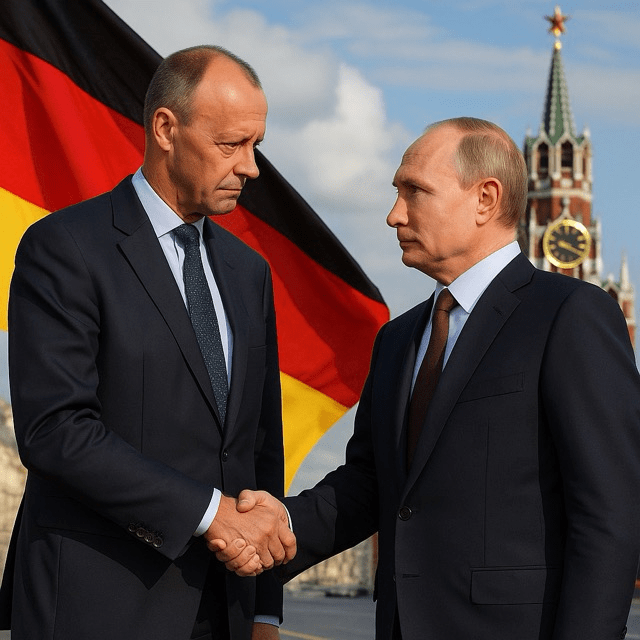
After two years of wavering coalition compromises, Germany’s foreign‑policy compass is swinging back toward classical Realpolitik. At the centre of this shift stands Friedrich Merz, leader of the Christian Democratic Union (CDU) and newly confirmed candidate for chancellor in the 2025 federal election. Merz promises a sober, interest‑driven posture that discards what he calls the Scholz government’s “moral sermonising.” His first test: how to deal with Vladimir Putin as Russia digs in for a fourth year of war against Ukraine.
1. From Zeitenwende to Steel‑Spine Diplomacy
Chancellor Olaf Scholz’s celebrated Zeitenwende speech in February 2022 heralded €100 billion for the Bundeswehr and an end to energy dependence on Moscow. Yet implementation lagged, and public frustration grew over ballooning defence bureaucracy, patchy Patriot deliveries and soaring electricity bills. Merz capitalises on that fatigue, arguing that Realpolitik means delivering hard power faster, not drafting visionary essays.
2. Who Is Friedrich Merz?
A corporate lawyer turned politician, Merz chaired BlackRock Germany before reclaiming the CDU helm in 2022. Long seen as the CDU’s conservative conscience, he mixes Atlanticist instincts with a boardroom eye for cost‑benefit ratios. Critics brand him a cold technocrat; supporters counter that his clarity is exactly what Berlin needs after years of grand‑coalition mush.
3. The Merz Doctrine on Russia
Merz lays out three pillars:
• Deterrence through Capability — Raise defence spending to 3 percent of GDP by 2028 and fast‑track Eurofighter and Arrow‑3 acquisitions.
• Economic Pressure with Teeth — Make secondary sanctions automatic for any EU firm circumventing the oil price cap.
• Conditional Dialogue — Keep a diplomatic channel to Moscow open but condition any easing of sanctions on verified troop withdrawals from Ukraine.
4. Berlin, Brussels and NATO
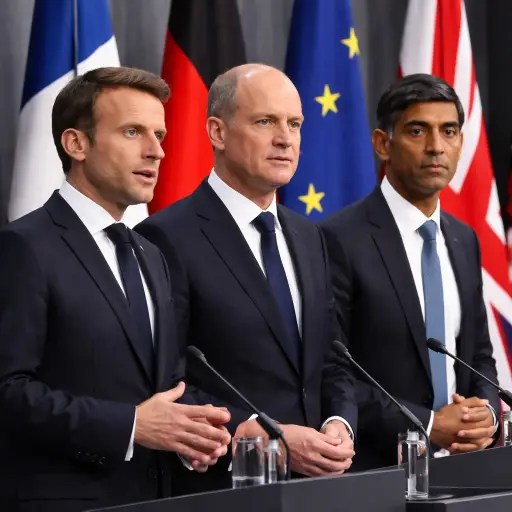
Merz’s push dovetails with NATO’s new Regional Defence Plans, which assign Germany a frontline logistics role. He pledges to station a permanent heavy brigade in Lithuania and supports joint nuclear‑sharing drills, moves certain to irritate the Kremlin. Within the EU, he backs qualified‑majority voting for foreign policy—a swipe at Viktor Orbán’s veto power.
5. Energy Realities
Realpolitik also means calculus on gas and hydrogen. Merz supports LNG contracts with Qatar and the United States, but signals a pragmatic openness to reopening Nord Stream 1 “only after a verifiable peace.” Greens call it a dangerous loophole; industry groups applaud the flexibility as German power prices hover near €120 per MWh.
6. Kremlin Calculus
Putin’s advisors reportedly view Merz as tougher than Scholz but more predictable than the Greens’ leadership. Russian state media have begun testing narratives casting Merz as a “Wall Street proxy,” hinting at future information‑war fare. Analysts at the Carnegie Endowment suggest Moscow may probe Merz early—via cyber raids or Kaliningrad bomber flights—to map his red lines.
7. Domestic Balancing Act
Merz must still navigate a fractured electorate: war‑weary voters in eastern states question escalatory rhetoric, while business lobbies crave stable export channels. His answer: pair deterrence with tax credits for firms reshoring supply chains from Russia and China.
Conclusion
Germany’s return to Realpolitik under a potential Merz chancellorship would not mean nostalgia for Ostpolitik; it would mark a pivot to interests over illusions. Whether that new realism stiffens Europe’s spine—or revives old energy dependencies—will hinge on Merz’s first encounter with Vladimir Putin. In the chess game of continental security, Berlin is preparing to swap its soft‑power bishop for a hard‑power rook.
 The Tower Post