How unprecedented direct talks and third‑party mediation aim to de‑escalate the region’s most overlooked flashpoint
Introduction
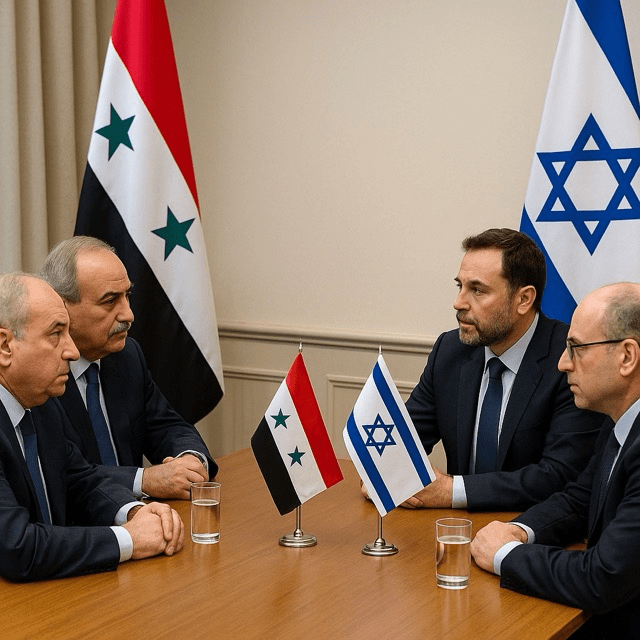
When Reuters broke the news that Israeli and Syrian officials had met face‑to‑face in Amman and Abu Dhabi earlier this month, seasoned Middle‑East diplomats called it the most significant thaw on the Golan front since the 1974 Disengagement Agreement. The talks, confirmed by multiple Israeli and Syrian sources, come after a year of tit‑for‑tat airstrikes, cross‑border rocket fire and fears that Iran‑backed militias could drag both countries into a wider war.
1. Why Now?
Two dynamics forced both sides to the table. First, Syria’s post‑Assad interim president Ahmed al‑Sharaa needs regional legitimacy and relief from Israeli air power as he battles jihadist factions and rebuilds a fractured state.Second, Israel’s security cabinet is under domestic pressure to reduce troop deployments on multiple fronts following the January 2025 Gaza ceasefire. With Hezbollah quiet on the northern border, Jerusalem sees a window to lock in a separate de‑confliction channel with Damascus before Iran regroups.
2. Anatomy of the Talks
Negotiations are unfolding along three tracks:
• Security Track — Military liaison teams are discussing buffer‑zone monitoring, including a revival of the UN Disengagement Observer Force’s dormant patrol routes. Israel wants GPS‑tagged no‑fly corridors for its jets; Syria seeks real‑time alerts before any strike on Iranian assets.
• Humanitarian Track — A prisoner‑exchange mechanism is on the table, as is Israeli technical aid to restore Quneitra’s water network in exchange for the return of two missing IDF soldiers’ remains.
• Political Track — The United Arab Emirates and Jordan chair fortnightly shuttle sessions that could expand into a broader accord if initial agreements hold.
3. Regional Stakeholders
Iran is the elephant outside the negotiation room. Tehran publicly backs Syria’s sovereignty but privately fears any deal limiting its Quds Force supply corridors to Lebanon. Russia, now distracted by its own Ukrainian withdrawal and economic woes, has signalled cautious approval, suggesting Moscow could redeploy military police to monitor any new buffer lines. The U.S., for its part, has offered satellite intelligence to verify missile launches from either side, while Gulf states dangle reconstruction loans to keep Damascus leaning away from Tehran.
4. Obstacles and Red Lines
Trust is paper‑thin. Israel insists that Hezbollah or Iranian UAV operators cannot be allowed within 40 km of the Golan Heights; Syria counters that it cannot police every militia commander still loyal to Tehran. Jerusalem also demands that any deal reaffirm the 1974 map, while Syrian negotiators float micro‑adjustments near the Shebaa Farms triangle. Domestic politics present another hurdle: hard‑liners in Israel’s ruling coalition want nothing less than formal Syrian recognition, whereas Syrian nationalist factions decry any ‘normalisation with the occupier.’
5. Early Confidence‑Building Measures
Despite the friction, small steps are visible. Israeli jets have not struck deep‑inside Syria since 15 May, the longest pause in 18 months. In return, Syrian air‑defence batteries reportedly turned off tracking radars during Israel’s latest raid on Iran‑run depots near Aleppo—a tacit signal of compliance. Farmers on both sides of the 1974 Alpha Line say they have been allowed to harvest orchards previously caught in live‑fire zones.
6. The UN and the Law
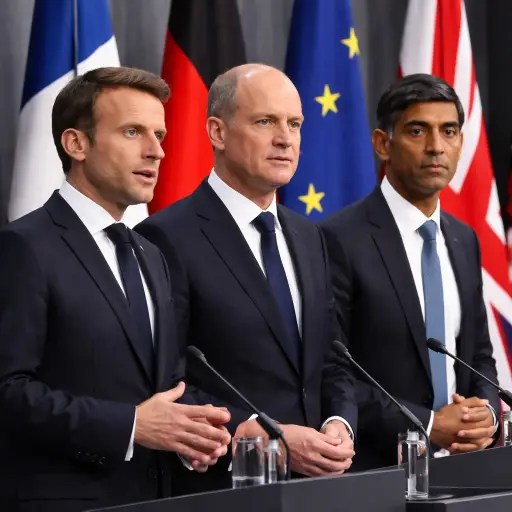
Senior UN officials told the Security Council last month that all parties must return to the letter of the Disengagement Agreement. A draft resolution, circulated by France, would task UNDOF with new surveillance drones and give the force authority to investigate violations within hours. Both Israel and Syria have signalled tentative support—though Jerusalem seeks wording that explicitly condemns Iranian entrenchment.
7. What Success Would Look Like
Analysts at the International Crisis Group argue that even a limited memorandum—freezing airstrikes beyond 20 km from the border—could lower the temperature enough for deeper talks on water, refugees and border trade. Success would also offer the Biden administration (and the next Israeli government) a rare diplomatic victory in a region often defined by stalemate.
Conclusion
History counsels caution: the Golan front has cycled through calm and conflagration since 1967. Yet the combination of Syrian state fragility, Israeli strategic overstretch and Gulf mediation has forged an unlikely pathway to de‑escalation. If the parties can turn temporary silence into codified restraint, 2025 may be remembered not for another Middle‑East war, but for the moment two old enemies decided the price of endless brinkmanship finally outweighed its utility.
 The Tower Post