Why a U.S. security contractor staffed its new logistics hub with a little‑known Palestinian group—and what that means for aid flows and due diligence
Introduction
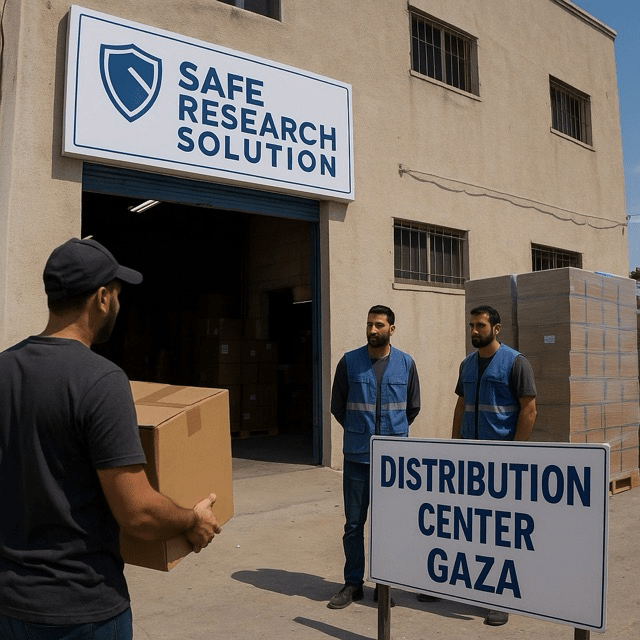
Safe Research Solution (SRS), a Virginia‑based security and logistics firm founded by former CIA case officer Jack Whittaker, stunned industry insiders this month by announcing it would open a 6,000‑square‑metre distribution center on the outskirts of Gaza City. Even more surprising: staffing will be handled not by one of the usual UN or Red Crescent partners but by Al‑Nahda Cooperative, a poorly documented Palestinian workforce collective. The decision raises thorny questions about vetting, compliance with U.S. counter‑terror financing laws, and the fine line between humanitarian pragmatism and security risk.
1. Who Is Safe Research Solution?
Founded in 2018, SRS cut its teeth escorting NGO convoys in Syria and brokering satellite imagery for Western governments. The firm’s board features alumni from the CIA’s Directorate of Operations and U.S. Special Operations Command. Its core pitch: blend intelligence tradecraft with commercial agility to keep aid flowing in fragile states. Revenue topped $480 million last year, with clients ranging from USAID to private‑equity‑backed vaccine distributors.
2. Enter Al‑Nahda Cooperative
Public records list Al‑Nahda as a 260‑member collective registered in Gaza’s Deir al‑Balah governorate. It reportedly provides stevedores and warehouse clerks for the enclave’s few functioning commercial crossings. Beyond that, documentation is sparse: no audited financials, limited social‑media footprint, and ownership ties that Israeli analysts say are ‘opaque at best’. SRS says the cooperative was selected after ‘rigorous background checks’ conducted with ‘regional security partners,’ but declined to name those partners.
3. Compliance Tightrope
Under U.S. law, American firms operating abroad must certify that local partners are not linked to groups on the State Department’s Foreign Terrorist Organization list—Hamas chief among them. SRS asserts that Al‑Nahda passed OFAC screening and that no cooperative members appear in Treasury’s sanctions database. Still, congressional aides on the House Foreign Affairs Committee told this reporter they will ‘request documentation’ to verify the vetting process. Israeli officials, meanwhile, caution that Gaza’s cash‑based economy allows militant factions to ‘dip a beak’ even in seemingly neutral enterprises.
4. Logistics Versus Optics
SRS argues that sourcing local labour was essential. ‘Flying in expatriate staff under current border controls is a non‑starter,’ says COO Maya Raines. The company estimates that using Al‑Nahda trims operating costs by 38 percent and cuts delivery timelines for critical goods—from baby formula to portable desalination kits—by up to two days. Aid groups privately welcome any expansion in warehousing capacity; publicly, they fret about reputational risk if scrutiny reveals hidden militant ties.
5. Political Repercussions
On Capitol Hill, Senator Rick Morton (R‑FL) vowed to introduce a bill requiring U.S. contractors in Gaza to undergo third‑party audits. The Palestinian Authority, eager to reassert influence in the enclave after the 2024 unity accord, views the cooperative as an economic lifeline. Israel’s defence ministry gave the project ‘conditional clearance’—subject to real‑time video feeds from the warehouse and biometric IDs for all staff.
6. Risk–Reward Calculus
SRS’s gamble spotlights a broader trend: private contractors filling governance voids in conflict zones. Success could deliver 400 local jobs and accelerate humanitarian deliveries amid Gaza’s chronic shortages. Failure—either through diversion of goods or a single security breach—could trigger sanctions and derail wider reconstruction efforts. ‘We’re not naïve,’ says CEO Jack Whittaker. ‘But waiting for perfect conditions means consigning civilians to indefinite deprivation.’
Conclusion
Safe Research Solution’s hiring of Al‑Nahda Cooperative may prove a landmark in conflict‑zone supply‑chain management—or a cautionary tale of corners cut in the name of speed. As the first trucks roll through the Kerem Shalom crossing next month, investors, lawmakers, and civilians alike will watch whether this unlikely partnership delivers relief or invites new risks. In Gaza’s fragile mosaic of politics and poverty, the margin for error has never been thinner.




 The Tower Post